

Most men will read this and move on.
They’ll nod.
They’ll feel something stir.
Then the phone will buzz, and they’ll be gone. Back to the noise. Back to the comfortable half-life they’ve called a journey.
This article is not for those men.
This is for the man who can’t stop the question. The one who looks at everything he has built and suspects, deep in his chest, that he is still asleep. The man who has tried the easy path and found it does not lead anywhere worth going.
The hard path asks more than most men are willing to give. It asks you to see yourself clearly. It asks you to surrender what you cannot keep to gain what you cannot lose. It asks you to walk toward the fire instead of away from it.
Most men won’t do this.
A few will.
This is for them.
First Thing: Stop Pretending
There is a kind of man who calls himself a seeker but is actually hiding. He uses the language of openness to avoid the cost of commitment. He says he hasn’t found the truth yet because finding it would require him to change. He calls this being careful. What it actually is, is cowardice dressed in philosophical clothing.
Agnosticism gave a lot of men permission to delay the decision they already knew they needed to make. It let them live in the comfortable fiction that indecision is not itself a decision. But it is.
Every hour you spend not choosing is a choice. Plato knew it. The stoics knew it. The Church Fathers knew it. And somewhere under your defenses, you know it too.
The hard path starts not with a great act of faith, but with a small act of honesty. You look at yourself and you stop lying. You admit what you actually believe, what you actually fear, and what you are actually avoiding.
“Above all, don’t lie to yourself. The man who lies to himself and listens to his own lie comes to a point that he cannot distinguish the truth within him.”
— Dostoevsky, The Brothers Karamazov
Dostoevsky wrote confession.
The Brothers Karamazov is a mirror, and most men smash mirrors rather than look into them.
The hard path demands you look.
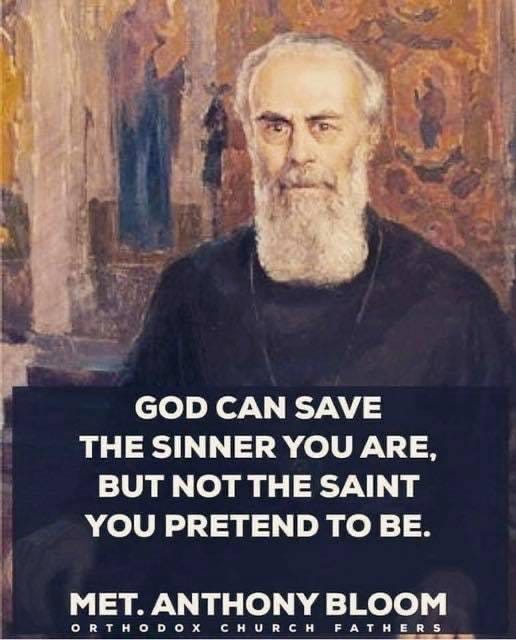
Pride builds a costume. Humility meets the Physician.
The first milestone on this road is not intellectual. It is not a theological position arrived at through argument. It is a broken man in the dirt, asking for mercy, and meaning it.
That is where the path begins.
Second Thing: Seek the Truth Where It Lives
Modern men are drowning in information and starving for wisdom.
They carry the sum of human knowledge in their pockets and know less about how to live than their grandfathers did.
The philosopher Nassim Taleb wrote about what he called “Lindy.” A thing is Lindy because it’s continued existence is evidence of its durability. A newspaper lasts a day. A book that has survived fifty years will likely survive fifty more. A text that has endured a thousand years carries a different weight than this morning’s trending opinion. The older something is, the more Lindy, the less fragile, and more enduring truth.
The hard path requires you to think this way.
It requires you to go back to the source. The ancient philosophers understood things about the soul that your therapist’s training never covered. Epictetus, writing as a former slave, understood that the only path to freedom runs through the will aligned with truth, not through acquiring more options. Plato understood that the world of shadows on the cave wall is not all there is, and that the man who has seen the light has a responsibility to go back into the cave.
But even Plato knew he was pointing at something he could not fully name. He had the outline. He did not have the face.
The hard path takes you through the philosophers and then past them. Through Scripture, the living account of God pursuing men who kept running from Him. Revealing the Fathers of the Church, who held the deposit of the Apostles as a living inheritance. And backward through time until you arrive at something so ancient it has outlasted every empire, every argument, and every attempt to suppress it.
Truth is not merely what is.
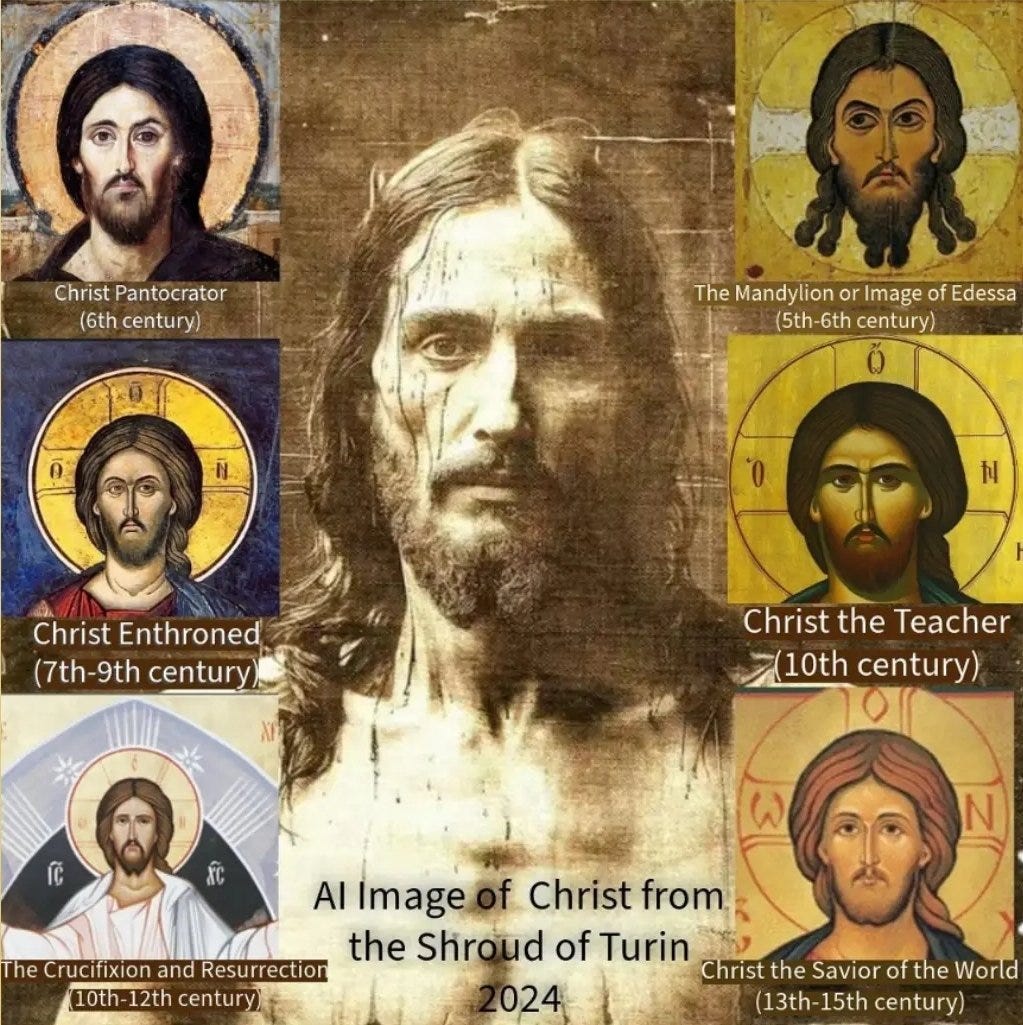
The hard path is a pilgrimage.
You don’t simply think your way to the destination.
You walk toward it, and the walking changes you.
Third Thing: Let Your Body Follow
Here is where many men get lost.
Men want a faith that lives in their head and leaves their body alone. They want spiritual insights that do not require any practice, any obedience, any showing up somewhere with other people and doing the same things week after week for the rest of their lives.
This is another version of hiding.
God made you a body. He did not apologize for this. He became mankind Himself. The Incarnation is not a metaphor. The Son of God took flesh, walked on real ground, sweat, bled, ate fish after the Resurrection, and ascended in a body. If you have a theology that treats your body as a delivery system for your soul while your soul waits for the real spiritual experience, you have accepted a lie so old it has its own name: Gnosticism.
The Kingdom of God is physical. It is not only physical. But it is physical.
Baptism uses real water. The Eucharist is bread and wine. Confession is spoken to a real priest. You kneel. You bow. You fast. You stand for two hours in worship and your feet remind you that this is not entertainment; it is participation. These are not add-ons to a “personal relationship.” They are the Way Christ gave His Body to actually carry you into His life. You do not think your way into the Kingdom. You enter it as you enter every real place: with your body, through a door.
The hard path demands that you find the visible Church and enter it.
Find a real table, a real bishop, real sacraments, real discipline, real accountability, real community. A place you can walk into and be healed.
“What is not assumed is not healed.”
— St. Gregory the Theologian
Christ assumed your whole humanity. That means your whole humanity can be healed. But you have to show up with all of it.
Fourth Thing: Let Yourself Be Healed
A broken bone, left alone, will sometimes fuse wrong. The man limps. He compensates. He builds his whole stride around the damage until he forgets there was ever another way to walk. Then the physician finds it, and the work of healing begins. And that work, setting the bone properly, hurts worse than the original break.
This is what the hard path does to a man. It heals him.
The self you surrender is the compensated version. The man shaped by pride, by unconfessed sin, by years of walking crooked and calling it strength. Confession finds the break and sets it. The Psalms prayed in the dark teach you to speak honestly. The Liturgy week after week realigns you, putting God at the center and slowly, painfully, freeing you from the exhausting work of keeping yourself there instead.
What emerges is the man God actually made.
“Christ in you, the hope of glory.”
— Colossians 1:27b
That is the reality the hard path is moving toward. The restoration of true self. Christ does not come to replace you. He comes to heal what sin has broken in you, to complete what was always meant to be there. The fathers called this theosis, union with God by grace, not by becoming something other than human, but by becoming fully human at last, as God intended from the beginning.
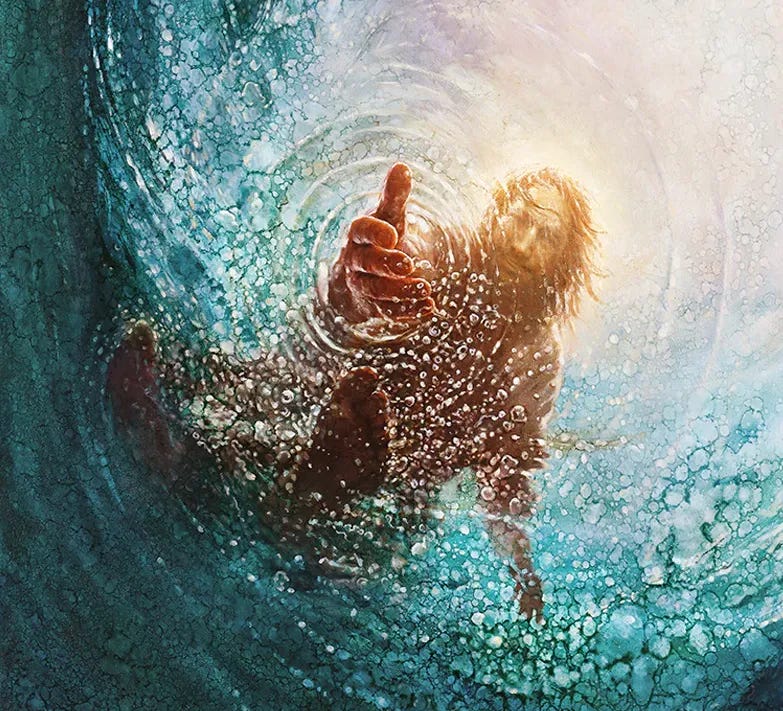
This is the point.
Not to escape your humanity.
Not to transcend the body, the mind, the heart.
But to have all of it healed. From the inside out. By union with the God-Man who took on everything that is wrong with us so that everything He is could reach everything we are.
“The glory of God is a living man; and the life of man is the vision of God.”
— St. Irenaeus
The bone set properly still aches for a season. But the man walks straight. And in time, he runs.
The Men Who Walk This Road
They are not the most impressive men in the room.
They are often the most honest. They carry their failures without hiding them and without being defined by them. They repent. They get back up. They come to the Cup as beggars.
They love their wives differently, more truly, than men who have not walked here.
They lead their households because they have learned to serve.
They understand that legacy is built by transmission: the faith, the character, the love handed down from one generation to the next.
They are not finished. They are not perfect. The hard path is not behind them; it is still under their feet. But they are walking it. And the walking has made them more alive, not less.
A Challenge for the Few Who Will Take It
Go back to the last question that genuinely unsettled you. The one that kept coming back. The one question you try to drown with distractions. The one that arrives in quiet moments and will not leave.
Follow it.
Follow it past the feel-good podcasts and the comfortable denominations telling you what you already believe.
Follow it to the oldest sources you can find.
Follow it past your assumptions.
Follow it until you arrive somewhere that costs you something.
Then stay.
The men who change, who actually become something other than what the world was shaping them to be, are the men who stay when it gets hard. Who confess when they would rather hide. Who receive when they would rather be self-sufficient. Who bow when they would rather stand apart.
Most men won’t do this.
The few who will are the ones history remembers. But more importantly, they are the ones their children remember. And their children’s children.
Awake, O Sleeper.
The hour is later than you think.
The path is narrower than you want.
And it leads somewhere worth going.