

I watched a preacher tear open a plastic bag from Kroger, rip a loaf of bread in half, and laugh as the crumbs scattered across the floor.
My stomach turned.
That was the moment I stopped pretending.
I had sat in Protestant services for years. Good people. Sincere people. People who loved Jesus and meant every word they sang. I was one of them. I preached, served, gave, and played bass in a praise band. But that afternoon, watching the grocery store bread hit the ground without a second thought, something broke in me I couldn’t fix.
It wasn’t anger at the pastor. It was grief. Deep, clarifying grief.
I had been hungry the whole time and never knew it. (My wife knew it.)
What Paul Actually Said
Most people treat 1 Corinthians 11 like a devotional thought. A reminder to be grateful before the juice and crackers.
That is not what Paul wrote!
“The cup of blessing that we bless, is it not a communion in the Blood of Christ? The bread that we break, is it not a communion in the Body of Christ?”
He didn’t say symbol. He didn’t say memorial. He said communion. Participation. Real contact.
Then he warned that eating and drinking “without discerning the body” brings judgment, and that some among them were weak, sick, and had even died because of it. That is not the language of a friendly remembrance snack. That is the language of a holy fire. You don’t get sick from touching a metaphor. You don’t die from a symbol.
Paul was describing an encounter with something real.
The Fathers Knew It
I had spent years reading Scripture. Then I started reading the men who knew the Apostles, who received the faith before anyone had invented denominations or theological systems to protect.
St. Ignatius of Antioch, bishop and martyr, who learned from the Apostle John himself, called the Eucharist the medicine of immortality. Not a reminder of immortality. The medicine itself.
St. Justin Martyr, writing to a Roman emperor in the second century to explain what Christians actually do, said the bread and wine are “not common food,” but the flesh and blood of the incarnate Jesus by His own word.
These men were not writing poetry. They were describing reality as they received it from those who received it from Christ Himself.
The Church guarded this with a seriousness that looked extreme from the outside. The catechumens, those still learning the faith, were dismissed before the Eucharistic prayer began. The deacon cried out “The holy things are for the holy,” and the people answered, trembling, “One is Holy, One is Lord, Jesus Christ.” The crumbs were guarded. The chalice was guarded. Communicants prepared through fasting, confession, and reconciliation.
Because love prepares for love.
The Fact I Can’t Shake
Here is where I want to be fair, because I mean this.
If the Eucharist is a symbol, then a Kroger loaf and laughter make sense. You are doing exactly what you think you are doing. You are remembering Jesus. You are encouraging one another. You are using bread and grape juice to stir up faith. There is no inconsistency there. The casual treatment fits the casual theology.
But if the Eucharist is what the Apostles, the martyrs, and the Fathers said it is, then anything less than reverence is madness.
I could not keep living in the middle. Either Paul meant what he wrote, or he didn’t. Either Ignatius, Justin, Cyril, Chrysostom, and the whole ancient Church got it right, or two thousand years of bloodshed to guard a table was the greatest collective delusion in human history.
I chose to believe the witnesses.

What Is Actually at Stake
People die.
Your grandmother will die. Your children will one day face a hospital room and a narrowing door. You will die.
The early Church had a word for the Eucharist given to those near death: viaticum. Food for the journey. Union with Christ carried into the valley of the shadow.
Confessors had the Eucharist smuggled to them in prison.
Christians hid in catacombs to gather around a table.
They were not risking execution for a metaphor.
They were not dying for a fond memory.
They were dying to receive what Christ promised to give, Himself, real presence, the medicine that death cannot cancel.
“Unless you eat the flesh of the Son of Man and drink His blood, you have no life in you.”
This is a diagnosis. I can believe every right doctrine, serve every need around me, preach every Sunday, and still starve if I refuse the way Christ chose to give Himself to His people.
The disciples on the road to Emmaus had the Scriptures opened to them. Their hearts burned. But they did not know Him until the breaking of the bread.
The Day I Came Home
When my family and I stepped into the Orthodox Church, confessed our sins, were baptized into Christ, and walked forward to the chalice with fear and love, something happened that I had no category for.
I gave what I could. Bread and wine. Repentance and a broken heart.
He gave back what I could never earn or manufacture. Forgiveness you can taste. Fire that does not consume the penitent. Life that does not stop at the grave.
He gave Himself.
And the strange thing, the thing I did not expect, was that receiving this made me love my Protestant brothers and sisters more. Not less. More. Because I wanted them fed. I wanted them to stop settling for hunger dressed up as sincerity. I wanted them to find the cup that is not pretend.
The Painful Challenge
I am not writing this to score points. I have no interest in winning arguments at the expense of people I love. My family and friends who read this, I love you all.
But I am writing because the stakes are real, and I spent too many years at a table that could not feed me.
If this stings, I understand. It stung me.
If you are a man who leads a family, who wants to pass something real to your children, who wants to build a legacy that outlives you, I am asking a hard question:
What are you giving them at the table?
Are you giving them a tradition of man, or are you giving them Christ Himself?
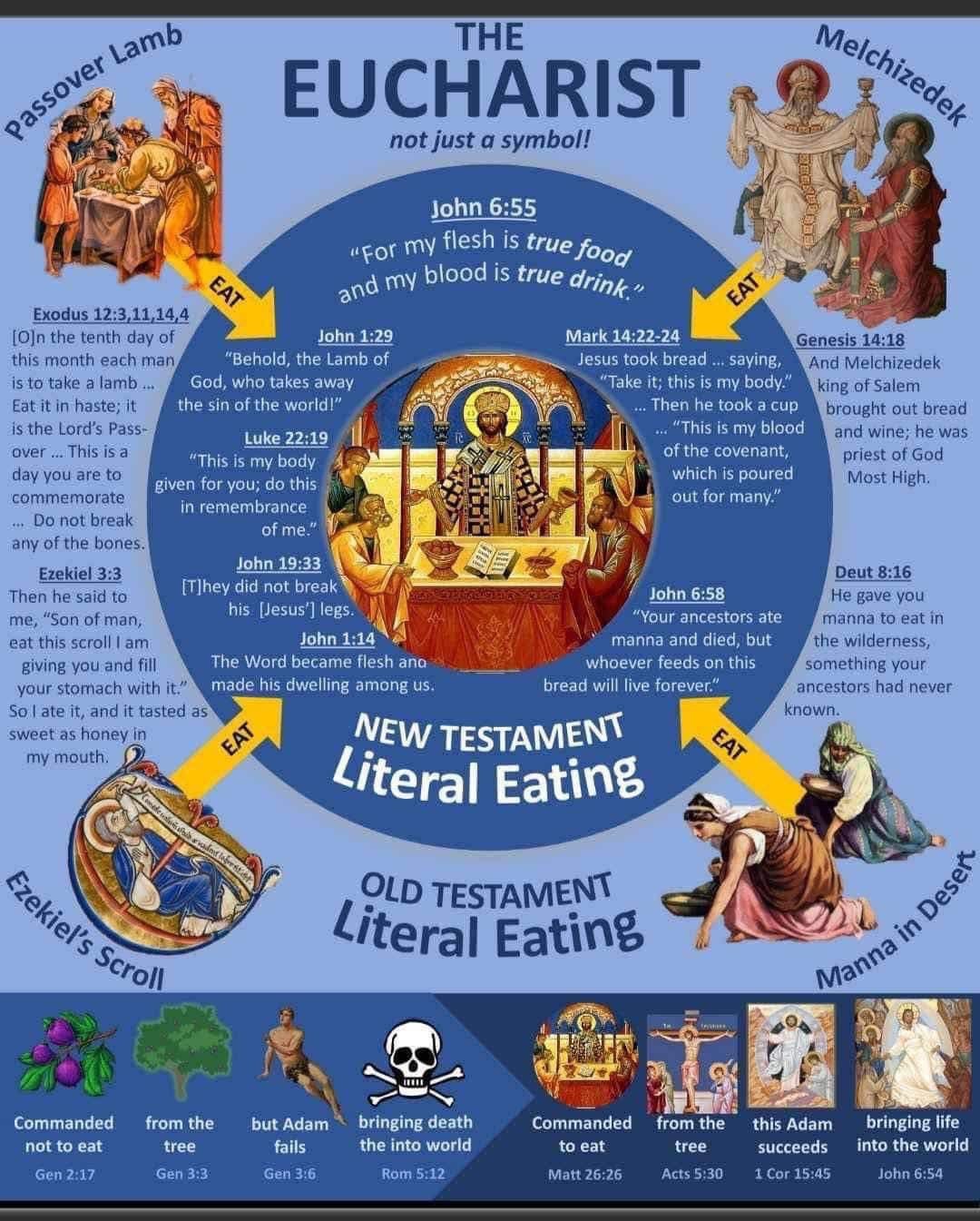
Come and See
Stand in an Orthodox Liturgy. Hear “Holy, Holy, Holy” rise from the people. Watch the priest call down the Holy Spirit over the gifts. Watch men, women, and children come forward as beggars, hands crossed on their chests, trembling and grateful.
Ask whether this looks like the Book of Acts and the Fathers, or like a modern production.
Ask whether two thousand years of martyrs, saints, and ordinary faithful people were all confused, or whether you might be standing at a distance from something worth drawing near to.
The table is set. The Lamb is the feast. Come hungry. Leave alive.
Truth & Prosperity covers Faith, Family, Finance, Leadership, and Legacy for men who want to build something that outlasts them. This is the 16th article on my journey into the Ancient Christian Faith.
Thank you for this well-written and thought-provoking article. I’ve only set foot in an Orthodox Church a couple of times, but the sense of holiness — keeping the Sacred sacred — left an impression on me.