

The smoke has cleared.
The grills are cold.
The folding chairs are back in the garage.
Somewhere a city crew is sweeping the last of the spent shells off Main Street, and the bunting that hung from every porch and storefront is starting to look tired in the heat. It was a good show. The biggest this country has thrown in your lifetime. Two hundred and fifty years, and the people who run things spared no expense reminding you of it.
Celebration and community are good things. A nation should mark its years. A people with no memory have no future, and gratitude is right for men who have been handed as much as we have been handed. Freedom. A frontier that built a certain kind of soul. The pioneer spirit that is now catching rockets ships on their launch pads like something out of a book. There is real glory in that, and a serious man does not sneer at it.
But it is the day after now. The crowd has gone home. And the morning after is when a man tells himself the truth he could not hear over the noise.
So here is the truth. That number on the banners is not just a birthday. It is a clock.
The Number Nobody Wanted to Read Aloud
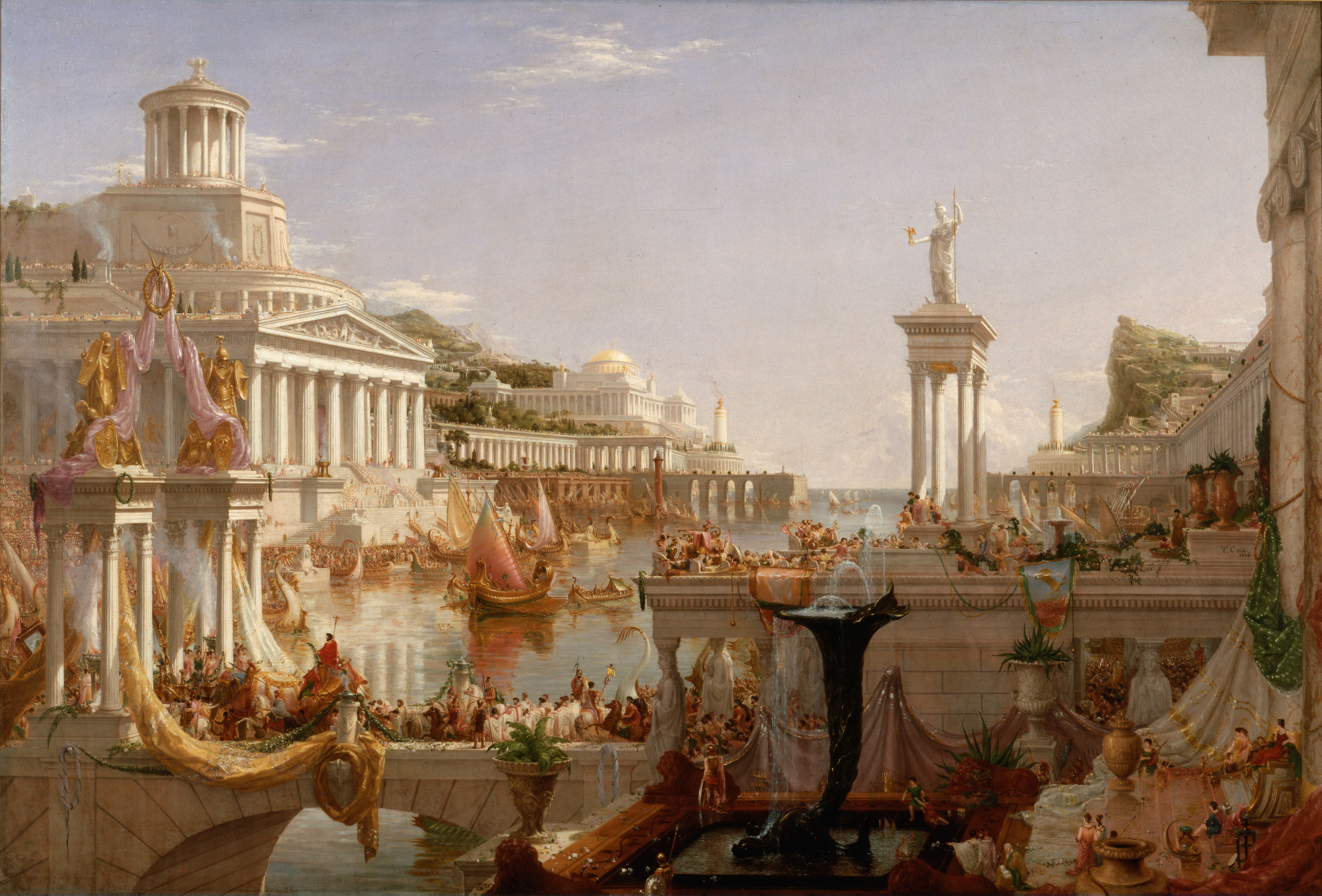
There was a British general named Sir John Glubb who spent his life in the field and his retirement in the archives. He studied empires, eleven of them, from the Assyrians to his own British one, and he went looking for a pattern. He found one. He published it in 1976 in a quiet little essay called The Fate of Empires, and almost nobody read it.
What he found is this. The average lifespan of imperial greatness, measured across three thousand years and across every religion, race, and form of government you can name, is about two hundred and fifty years. Ten generations. The number barely moves. Rome moved through it. Persia moved through it. Spain, the Ottomans, the British. Different centuries, different religious views, same arc.
And the arc has stages. The Age of Pioneers, when hard men do hard things and build something from nothing. The Age of Conquests. The Age of Commerce, when the wealth starts pouring in. The Age of Affluence, when the wealth is simply there. The Age of Intellect, when the universities swell and the clever crowd out the courageous. And then the last one. The one Glubb gave the heaviest name.
The Age of Decadence.
An age of decadence, he wrote, is marked by an obsession with celebrity. By frivolity. By a defensive crouch where a confident people used to stand. By a widening dependence on the state to provide what families and communities once provided for themselves.
Different Roads, Same Destination
If it were only Glubb, you could wave it off. One amateur historian, one tidy theory, easy to ignore. But Glubb is not alone, and that is the part that should make a serious man sit up.
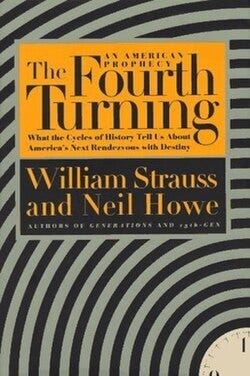
A historian named Neil Howe, working from generational cycles and not from empires at all, has spent thirty years arguing that this country moves through a recurring “fourth turning,” a season of crisis and upheaval that arrives roughly every eighty years, on the length of a long human life. By his reckoning the current one climaxes in the early 2030s. Different method entirely. Same neighborhood on the calendar.
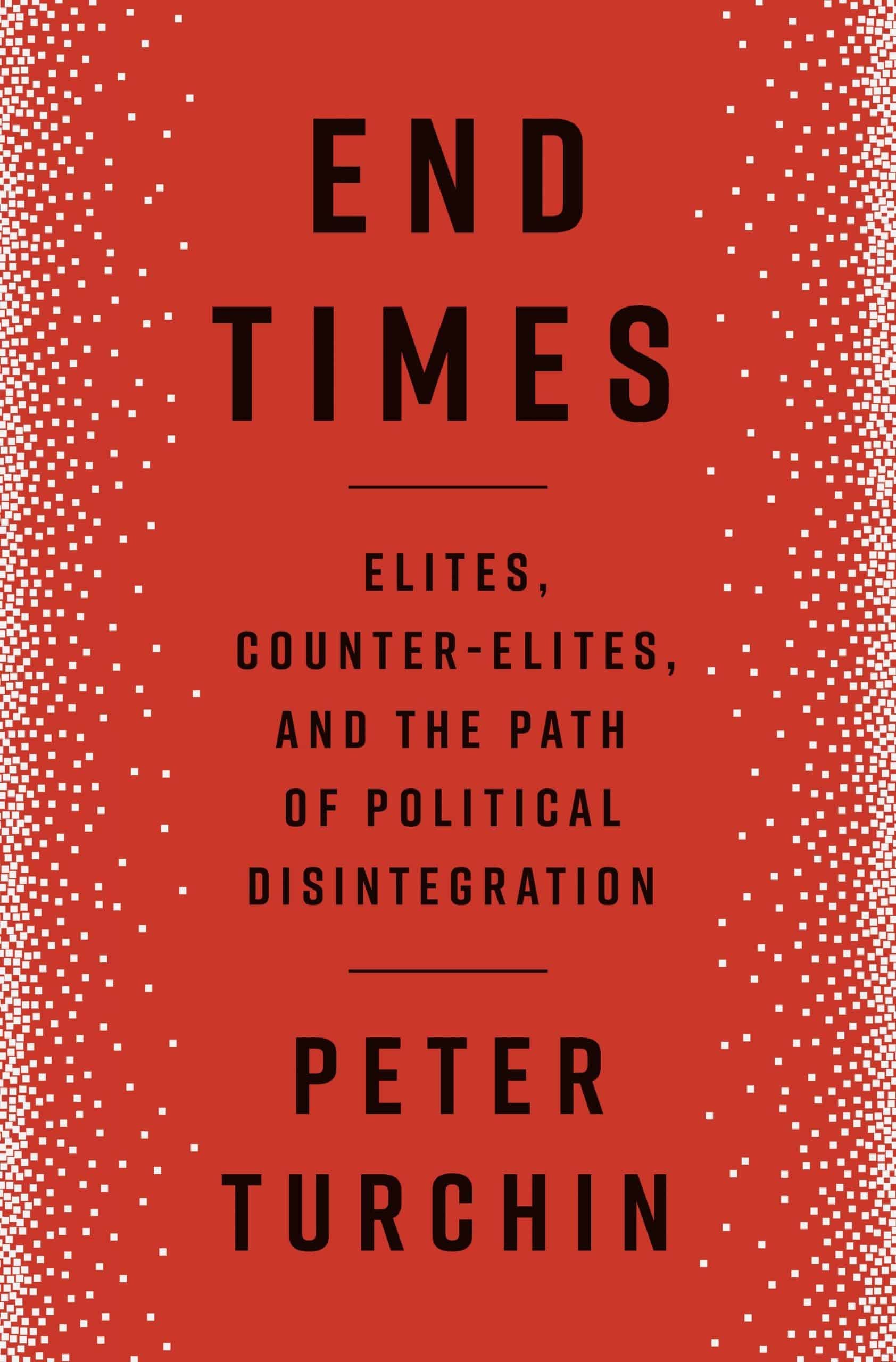
Then there is Peter Turchin, who does not deal in seasons or archetypes at all. He deals in data. He tracks something he calls elite overproduction, too many credentialed people fighting over too few real seats at the table, and he watches what that pressure has done to every society it has ever touched. His models pointed at instability peaking in the 2020s, cresting around 2030. Three men. Three completely different roads. One destination.
When one prophet names a date, you are right to be skeptical. When three men using three unrelated methods keep arriving at the same stretch of road, skepticism stops being wisdom and starts being denial.
This is not a prediction that the lights go out next Tuesday. Glubb himself said empires rarely fall to a single blow. They hollow. They get loud and brittle at the same time, and the noise is loudest right at the end. A grand and expensive party is not evidence against decadence. It is the single most reliable symptom of it. Bread and circuses are not a new accusation. The men who first used the phrase were watching it happen.
The Disease Has a Much Older Name
Here is where the businessman in me has to step aside and let the Church speak, because Glubb described the symptom and the Fathers diagnosed the disease sixteen centuries before he was born.
When Rome fell in his own lifetime, Saint Augustine sat down and wrote the book that explains all of this better than any modern can. He said there are finally only two cities a man can belong to, and they are built out of two different loves. “The earthly city was created by self-love reaching the point of contempt for God. The Heavenly City by the love of God carried as far as contempt of self.”
Sit with what that means against everything above. Glubb studied eleven empires and concluded they died of affluence curdling into self-regard, of a people turning inward to worship their own comfort. Augustine had already named the engine of it. The earthly city is built out of self-love. It is not that empires occasionally fall into selfishness near the end. It is that the disordered love of self is the very material the earthly city is made of, from the first brick. Decadence is not a late corruption of the thing. It is the thing, finally showing its face.
This is the same lie I write about every week, the one that whispers your life is your own, just grown to the size of a nation. The cult of self does not only hollow out a man. It hollows out a civilization, on a clock, and the clock reads two hundred and fifty years.
Realize the Truth
Once you see that the thing eating the country is the same thing that eats the man, you cannot unsee it. The restlessness in your own chest and the brittleness in the headlines are not two problems. They are one problem at two different altitudes.
And this is the exact point where most men break the wrong way. They look at a clock that big and they do one of two things. They despair, deciding nothing they do matters against a tide that size. Or they get angry and pour the one life they have into trying to grab a national steering wheel that was never in their hands to begin with.
Both are traps. Both are the cult of self wearing a patriotic costume.
Because here is the thing the morning after makes clear. You were never asked to save the empire. No man on Glubb’s list of eleven was. The question in front of you was never whether you could reverse a three-thousand-year pattern by Friday. The question was, and still is, much smaller and much heavier than that. What are you building, in the years you actually have, in the few square feet you actually govern?
What Actually Survives the Fall
Look back across every one of those collapses and notice what is still standing in the rubble: The households. The families that kept the faith when the capital lost it. The fathers who taught their sons to read by candlelight while the libraries burned. The monasteries that copied the books through the dark centuries and handed civilization forward to people they would never meet. Rome fell. The Church that Rome could not kill is still here, and you can find it open this Sunday morning.
Noah did not deliver a speech to his generation. He did not run for office in a world that was about to drown. He built. Quietly, for a long time, while the culture laughed, he built the thing that would carry what mattered across the flood. That is the patriarch’s whole vocation in a single image. To build the ark.
And building the ark has an order to it, and the order is the entire point. You cannot hand your children a faith you do not have. You cannot bring peace to your community out of a home that is at war. You cannot order a nation while your own interior life is chaos. It goes from the inside out, or it does not go at all. Yourself first. Then the people across your own table. Then the church and the town and the work that God set in front of you. Then, and only then, anything larger.
I wrote a whole book working this out, because I needed the structure before I could live it. Five things have to be tended at every one of those levels, the same five, ordered outward. Your purpose. Your skill. Your relationships. Your environment. Your resources. Get them right in yourself and you can build them in your home. Get them right in your home and you can build them in your street. The decadence Glubb described is what you get when a people chases all five at the scale of an empire while every one of them rots at the scale of a man.
Right things, rightly ordered, from the inside out.
This is the battle cry, the forward march. Augustine told the very people he was warning to go on and seek the welfare of the city they lived in, to love it rightly, to pray for it, to build it up, just never to mistake it for home.
A man who has his own house in order is the only kind of man a community can actually be built from. The patriarch is the only raw material a nation worth having was ever made of.
The Line, and the Work
So draw the line here, on the day after.
You cannot stop the clock. Let that go. It is not your clock, and it never was. What you can do is refuse to spend your one and only life as a passive citizen of the dying city, waiting on a capital to hand you a meaning it has never once produced for anyone.
Build the ark instead. This week, not someday.
Worship, do not merely attend. Walk in on a Sunday morning and mean it.
Sit your children down and tell them, in plain words, what this family is actually for, because if you do not define it the spectacle will define it for them.
Put your money to work in things that will still be working a hundred years from now, instead of feeding it back into the machine that is throwing the party. Tend the five things, in yourself first, then in the people you can reach by name.
The empire will do what every empire on the list has done. That story is not yours to write. The household is. The household always has been. A household built on the love of God instead of the love of self does not run on anyone’s two-hundred-and-fifty-year clock.
The fireworks were fine. They were never the point.
What you build starting tomorrow morning is.
Build a legacy death cannot take.
Christopher Clay
Truth & Prosperity
New here? Start with the foundational essay on the Legacy Audit. The work to bring your life into focus. If you are further down the road and want the full structure under this morning’s piece, my book Five Principles works it out in full, and subscribers get it at a steep discount in the emailed letters.
Either way: subscribe, take the Legacy Audit, and let us build something the flood cannot reach.
Great article. Personally I didn't really celebrate the 250th. I think the founding fathers would be sadly disappointed by what's become of what they began. And I've heard of The Fourth Turning and believe it to be pretty accurate.
When the early 2030s hit, hang on to your butts.
“Build the ark” is a better response than despair. You may not control the age you live in, but you still control what you pass down.