

I went searching for the Kingdom with my mind on fire and my heart half-starved. I time-traveled with the philosophers, paced the stones of Israel, and wrestled Scripture until my soul ached. At the end of that long road, God revealed something too concrete to ignore and too beautiful to keep quiet:
The Eastern Orthodox Church is the fullness of the faith once for all delivered to the saints.
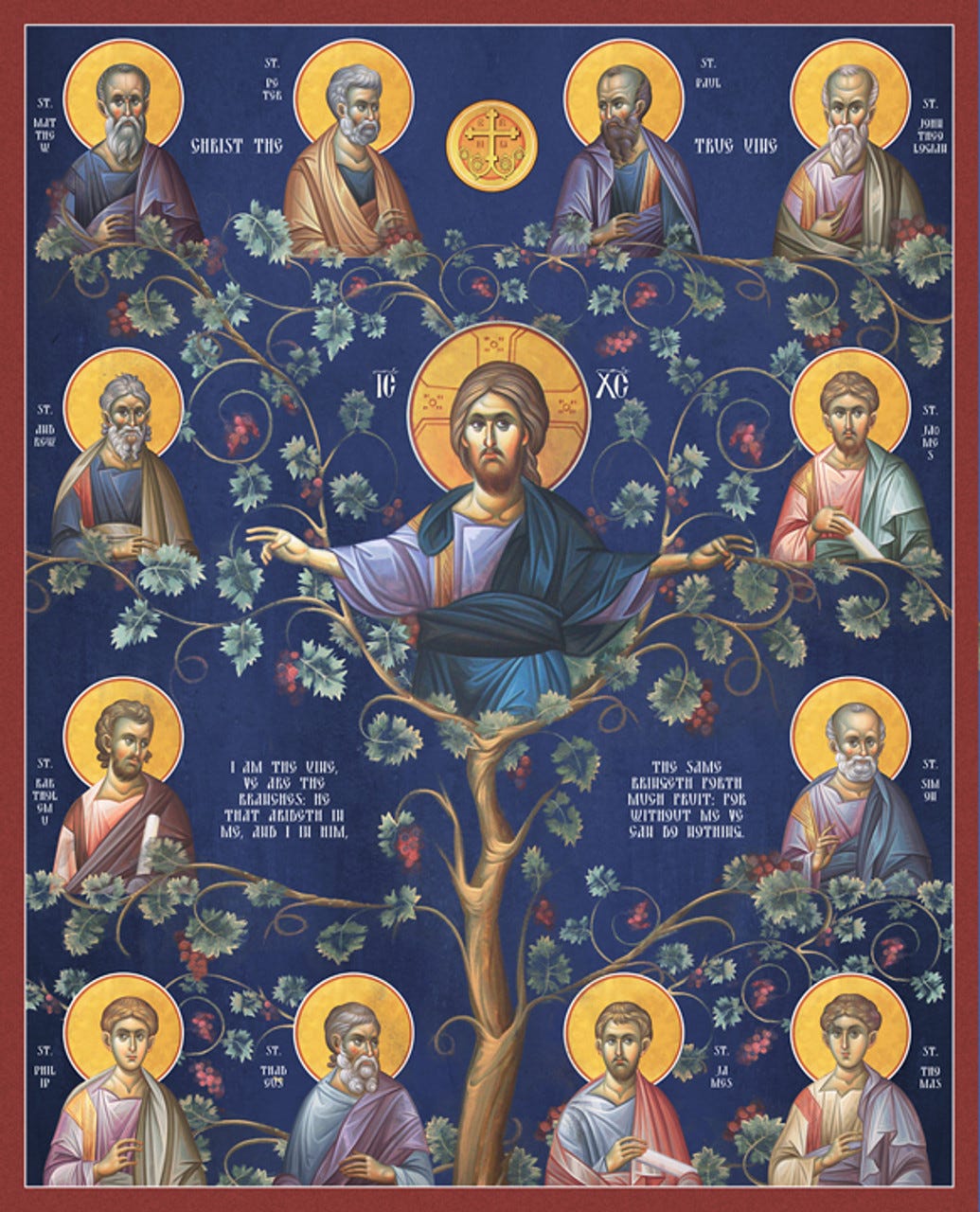
Not a brand. Not a denominational flavor. The Church. Visible. Sacramental. Apostolic. Handed down as the same life, the same worship, the same medicine the apostles received from Christ and gave to the world.
I know the objections. I made many of them myself. So let me speak plainly, without scandal, but with the urgency of a man who has finally found water in a desert.
As I have shown before, the Church in Acts is visible, ordered, and sacramental. Acts does not sketch an invisible association of like-minded readers. It reveals a body with bones.
Bishops who shepherd a real flock. (Acts 20:28)
Elders appointed in real cities. (Titus 1:5)
Tradition handed down through persons. (2 Timothy 2:2)
One pattern of life: “They devoted themselves to the apostles’ teaching and fellowship, to the breaking of the bread, and the prayers.” (Acts 2:42)
A council that binds, not a conversation where the loudest voice wins. (Acts 15)
This is the frame Orthodoxy has never set down: Eucharistic unity under a bishop in historic succession, holiness pursued as real therapy for the soul, catholicity as the same faith through places and centuries, and apostolicity as living continuity, not a slogan.
If you want the four marks of the Ancient Faith, one, holy, catholic, apostolic, you have to be able to point to them.
Orthodoxy can be found, joined, obeyed, and in it, by grace, you can be healed.
The Scripture presumes the Trinity, and Orthodoxy prays the Trinity.
The Church’s life flows from one God in three Persons: Father, Son, and Holy Spirit, co-eternal, co-equal, one essence. (Deuteronomy 6:4; John 1:1–14; Matthew 28:19; 2 Corinthians 13:14; Acts 5:3–4)
In Orthodoxy, the Trinity is the air you breathe. Every service begins, moves, and ends in that Name. You become like what you adore. Worship the Father through the Son in the Holy Spirit, and Love Himself remakes you.
A church that prays the Trinity is different from a church that merely affirms the Trinity. One is participation. The other is a legal document.
The Incarnation anchors everything. What God assumes, He heals.
If the Son truly became man, then matter matters. Water can be a tomb and a womb. (John 3:5; Romans 6:3–4; 1 Peter 3:21) Bread and wine can become communion in His Body and Blood. (John 6; 1 Corinthians 10:16–17) Repentance can become audible mercy breathed through the apostles. (John 20:22–23; James 5:16)
My tidy categories collapsed in front of three doors:
Confession: the Physician’s touch on named wounds, not private coping.
Baptism: a new birth God gives me, not a symbol.
Communion: the medicine of immortality, not a memorial tea party.
When my wife, daughters, and I stepped through those doors together, confessed, were baptized into the Kingdom, and came to the holy table, something happened that argument alone could never do. The Church became a home, not a hypothesis.
Scripture and Tradition are one river.
If your traditions do not trace back as far as your Scripture, there is a problem.
Scripture is the voice of the Shepherd.
Holy Tradition is the Church’s living memory of how to hear Him.
The apostles handed down both what to believe and how to worship. (2 Thessalonians 2:15) The Fathers guarded that deposit in councils, preaching, and prayer until it became the reflexes of the Body.
St. Irenaeus called this the Rule of Faith, the same Gospel recognized everywhere the apostles planted it.
St. Vincent of Lérins named its shape: what has been believed everywhere, always, by all.
St. Basil the Great noted that even the way we make the sign of the cross and face east at prayer is part of that apostolic inheritance.
Orthodoxy never needed to reinvent Christianity because it never unlearned it. It remembers the feel of the yoke Christ placed on His Church and refuses to trade it for novelty, even eloquent novelty.
The saints and their worship show the same face in every century. If you want to know the Church, watch how she prays.
Isaiah 6 and Revelation 4–5: “Holy, Holy, Holy,” incense rising, elders gathered, a Lamb upon the throne.
Luke 24: Christ known “in the breaking of the bread.”
Acts 2: Apostolic teaching, the prayers, the table, all public, ordered, communal.
Now walk into an Orthodox temple anywhere in the world. I have from the West Coast to the East, Israel to Italy. You will find the same grammar of heaven and earth: Scripture chanted, psalms prayed, icons confessing the Incarnation in color, the faithful crossing themselves, bowing, standing, receiving rather than inventing.
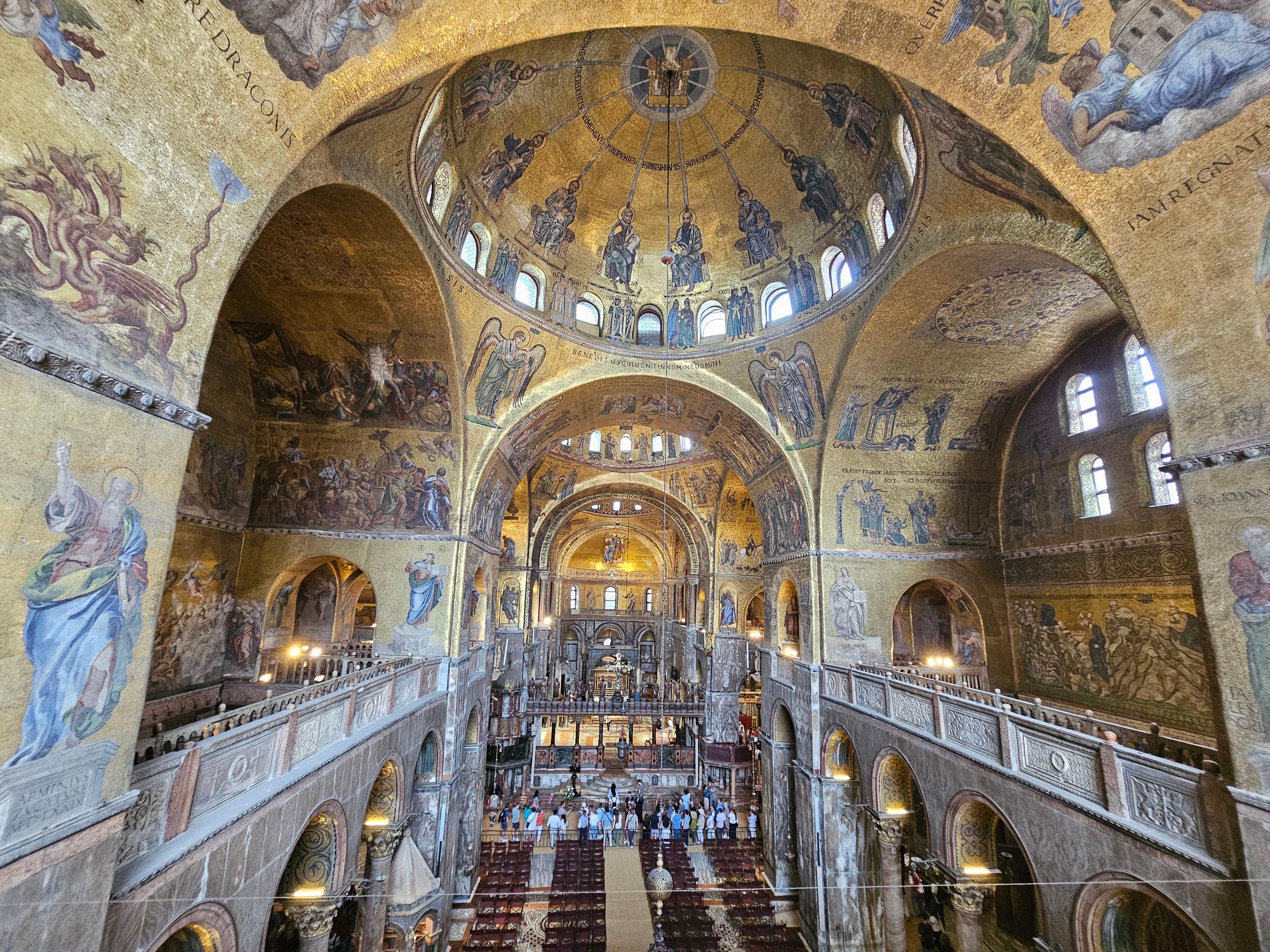
St. John Chrysostom’s Liturgy is participation in the one, eternal Liturgy Christ leads as High Priest.
This is real Christian worship, not a concert plus a talk. The people of God ascend to the heavenly altar while heaven descends to feed them. I’ll go deeper on this in the next piece, but hear the headline now: worship is not chiefly self-expression; it is communion in the Life of God.
The 2,000-year history of Orthodoxy is Lindy because Christ is alive. The things that last tend to be truer than the things that trend. The Orthodox Church has prayed the same prayers, kept the same sacraments, proclaimed the same Christ, and formed the same sort of people for two millennia, because the medicine works.
I read the philosophers who hint at the Logos, and I thank God for them. I stood in the pit beneath Caiaphas’ house, whispering Psalm 88 with tears, and thanked God for His descent. I watched modern “worship” turn sacred things into stage props and felt my stomach drop. I tried to make an “invisible church” feed a very visible family and failed.
When I finally stopped explaining away the plain sense of Scripture, stopped treating history like a buffet, and stopped pretending matter cannot carry grace, I found the Church that had been hiding in plain sight: the one you can find, join, obey, and be healed by.
The Orthodox Church was there in Dostoyevsky, there in Taleb’s writings, hidden behind Islamic oppression and an Iron Curtain, and then in miraculous form there it was in Beckley, West Virginia, at St. Nicholas.
I honor every grace I received in my Protestant upbringing: love for Scripture, zeal for mission, the welcome that met me, and more. I am not mocking the various Protestant houses. I am telling you in truth where the road from your best instincts actually leads.
Your love for the Bible points to the Church that canonized it and prays it whole, not redacted.
Your longing for holiness points to a hospital with time-tested therapies for the soul’s diseases.
Your hunger for communion points to a chalice that is not symbolically pretend.
If you disagree, do not argue with me first.
Come and see.
Stand in the Liturgy.
Hear the Gospel sung.
Watch the faithful approach the Cup with fear and love.
In faith and prayer, ask whether what you meet is older than your objections and kinder than your fears?
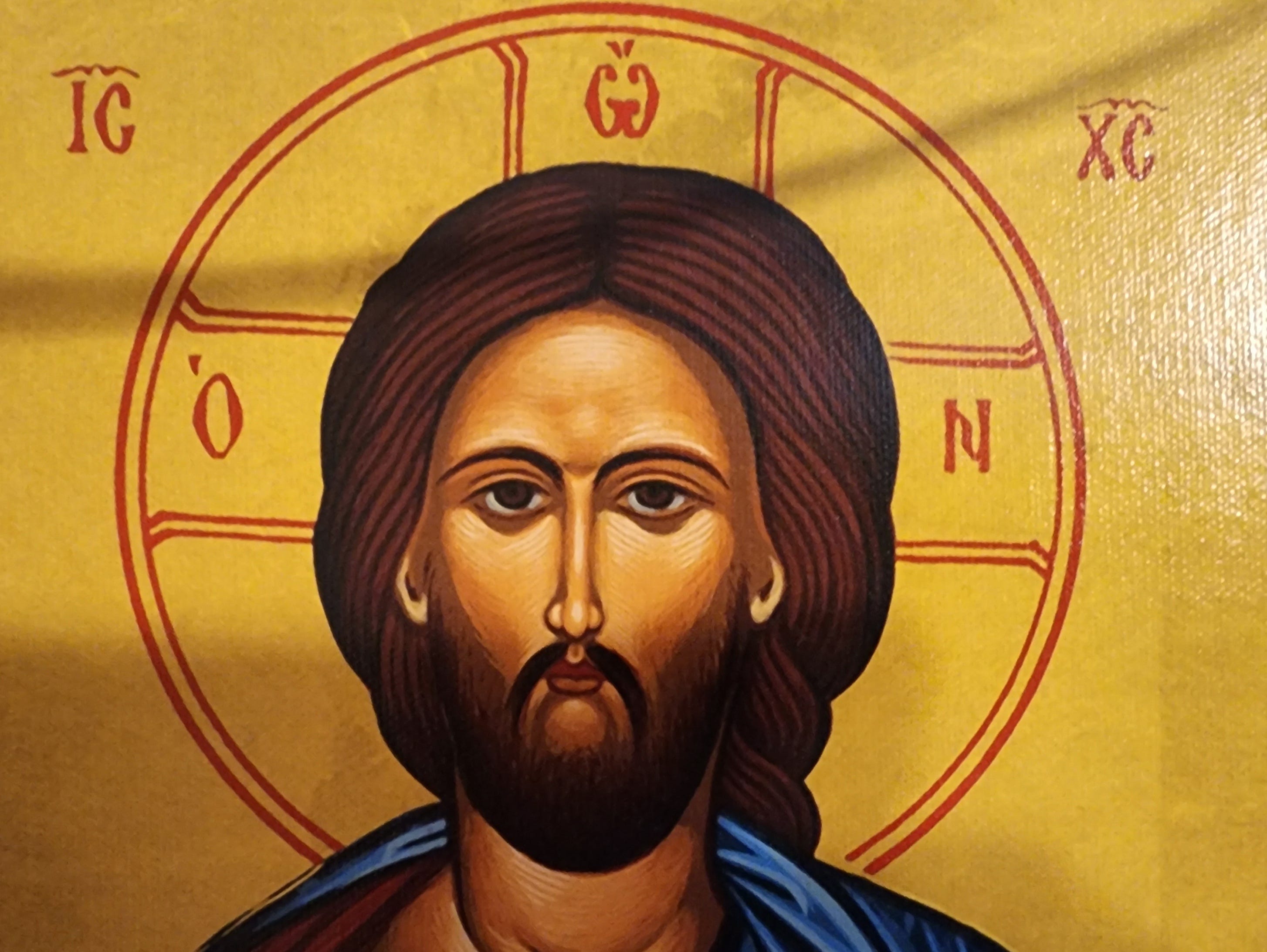
He did not leave us orphans.
He gave us His Church, His Body.
If you are tired of the cave-shadows and the flicker of your phone, if you have tasted every novelty and remain unfed, if you sense that worship should feel less like a show and more like stepping into a holy fire, then hear me:
Awake, O Sleeper.
Lay down the abstractions.
Take up the yoke that fits.
Seek the Kingdom where it can be found, in the one, holy, catholic, and apostolic Church.
I found it with my wife and daughters at my side: confession for our wounds, baptism into His death and rising, and the Eucharist for our life. The doors were not ideas. They were wood, water, oil, bread, wine, and a word of mercy.
This is how you build something that outlives you.
You stop chasing the next new thing and root yourself in the ancient faith that has formed saints for twenty centuries. You guard your heart and your household. You lead as a man of faith, not as a consumer of spiritual trends. You steward your time, your attention, and your resources for the Kingdom that cannot be shaken.
The world does not need more entertained Christians.
It needs rooted, faithful patriarchs who build legacy on the Rock.
Come and see. The table is set. The Physician waits. The doors are open.
Glory to God for all things!
If this stirs something in you, if you sense the pull toward the fullness of the faith, subscribe today. We are here for the ancient paths that actually work for faith, family, finance, leadership, and legacy that endures.
Let us build together.
Next: Real Christian Worship, what it looks like, why it heals, and how heaven teaches earth to sing.
ah! So well written!! May it serve to bless & guide many more seeking the Ancient Faith!