Most of what we call “Christian worship” today isn’t.
There. I said it.
Not because the people in those seats are bad people.
Not because the music isn’t moving or the preacher isn’t sincere.
But because somewhere in the last century, we traded the ancient, healing liturgy of the Church for a concert and a motivational talk, and called it an upgrade.
I know because I made that trade too. For years.
The Problem Nobody Wants to Name
Walk into most American churches on a Sunday morning and you’ll find lights designed for a stage, instruments that weren’t there 2000 years ago, a setlist curated for emotional peak, a sermon built around a theme, and an exit that feels a lot like leaving a good event.
And I get it. It feels worshipful. The music swells. People raise their hands. There are tears. There is energy.
But here is the question nobody is asking: Is God actually doing something to you, or are you doing something to yourself?
That is everything.
I spent decades in corporate boardrooms turning around struggling organizations. I know what it looks like when a system feels productive but produces nothing lasting. And I watched the same pattern in my spiritual life before I found what the Church has always known.
What Worship Actually Is
Real worship is not me expressing myself to God and hoping He notices.
Real worship is God drawing near to heal His people, and a people learning how to answer Him.
The Scriptures already gave us the shape. The Eastern Orthodox Church kept it.
Let us enter a Divine Liturgy anywhere in the world for the last few millennia:
The Psalms are the school, not inspiration. Prayers. Joy, despair, repentance, praise, complaint, hope. Every condition of the human soul is already in the Psalter. When you step into the Divine Liturgy, you can hear the Psalms braided through everything. They teach your heart to speak truthfully to God instead of to your appetites.
St. Athanasius wrote to his friend Marcellinus in the fourth century that the Psalms are unique among Scripture because you do not merely read them. You pray them. They become your words. The man who sings, “Out of the depths I have cried to You, O Lord,” during the darkest season of his life is not performing. He is being held by a prayer older than his grief.
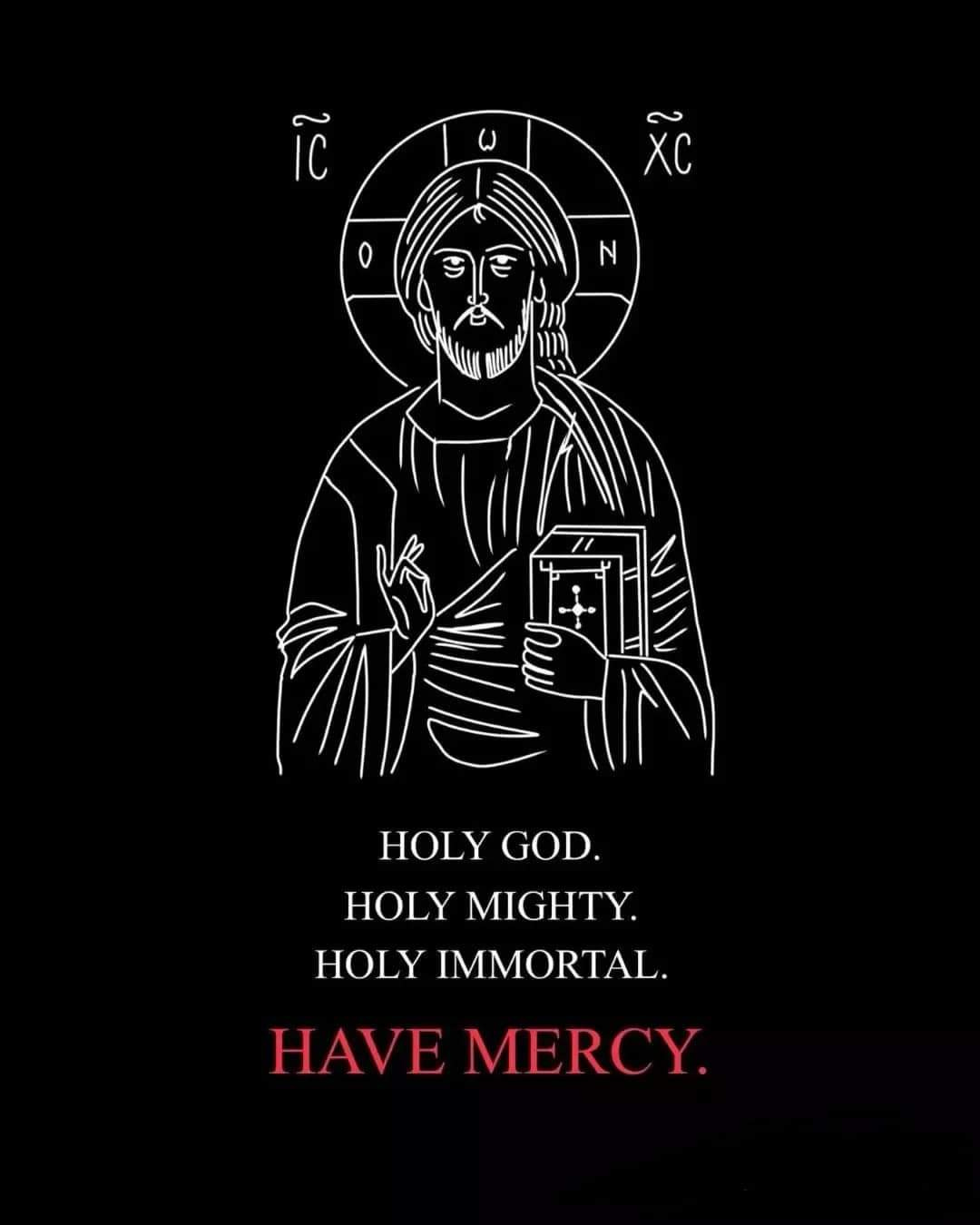
Worship begins in repentance. Not in hype. The first instinct in the Liturgy is “Lord, have mercy.” You bring sins, sorrow, and need. You do not bring a performance.
Holy, Holy, Holy
There is a moment in every Divine Liturgy where the congregation sings the Trisagion Hymn, the same song Isaiah heard when the seraphim covered their faces before the throne:
“Holy, Holy, Holy, Lord of Sabaoth. Heaven and earth are full of Your glory.”
This is the turning point.
Modern worship has largely lost the category of holiness. God has become our life coach, our good vibe, our cosmic friend who validates our journey. That is not the God of Scripture. It is not the God the early Church Fathers knew.
And yet. The Holy One reveals Himself as Father, Son, and Holy Spirit. The Trinity is not a puzzle to be solved in private. It is a life you are taken up into publicly. We worship the Father, through the Son, in the Holy Spirit, and that prayer remakes the man praying it.
Then the Creed. Not as a slogan or branding. It is a boundary of love. The ancient Christian Creed begins “I believe” and is recited in community, in a real place, out loud, with a real body, staking everything in a real God who entered real history.
The Medicine of Immortality
At the heart of all Christian worship stands thanksgiving.
Eucharist means thanksgiving.
We bring bread and wine, the work of human hands, and we confess that every good thing already came from Him. “Thine own of Thine own we offer unto Thee.” We give what He gave. And in His grace, He returns more than we gave. He returns Himself.
This is not a metaphor. St. Paul is not speaking metaphorically when he writes:
“The cup of blessing that we bless, is it not a communion in the Blood of Christ? The bread that we break, is it not a communion in the Body of Christ?” (1 Cor. 10:16)
St. Ignatius of Antioch, writing in the first century while walking toward his own martyrdom, called the Eucharist “the medicine of immortality.” Not a symbol. Not a memorial snack. Medicine.
Now I come as a beggar who found a hospital. So can you!
The Form Is the Freedom
Here is the objection I hear most often from good Christians:
“But doesn’t all that structure kill the Spirit? Shouldn’t worship be free?”
I used to think so. Then I started watching what “free” worship actually produces over time.
It produces worship shaped by the pastor’s personality. By the music team’s preferences. By what generated the most emotional response last Sunday. By trends. By the market. By the world.
The form protects you from this dangerous path. The ancient Liturgy keeps the worship about God and not about mankind. It protects the poor man from the tastes of the rich. It gives children the same prayers of the parents pray. It gives the dying the same words the saints prayed for fifteen centuries.
The same Liturgy that fed a prisoner in a Soviet labor camp feeds a man on his knees in Beckley, West Virginia on a cold Sunday morning. God is no respecter of trends.
St. Basil the Great, writing in the fourth century, argued that even the posture of worship, how we stand, how we face east, how we cross ourselves, belongs to the apostolic inheritance. Not because God is fussy about choreography, but because the body is not separate from the soul. What we do with our bodies trains what we love with our hearts.
Aristotle understood this. Today, modern psychology calls this embodied cognition. Scripture called it sanctification. The Eastern Orthodox Church built a whole liturgy around it that modern churches have forgotten.
Everything Preaches
Icons confess the Incarnation in color. We can paint what we have seen, because we have seen the face of God. He became man and dwelled among us.
Incense confesses that we are not bodies only. Our prayer rises.
Posture confesses humility as we bow before the throne.
Crossing ourselves confesses our baptism into His death and resurrection.
Nothing is filler. Nothing is mood lighting. Everything is theology.
St. Justin Martyr described the same pattern to Roman pagans in the second century: readings, sermon, prayers, the kiss of peace, bread and wine offered with thanksgiving, communion carried to the absent. The pattern is not a tradition we invented. It is a pattern we received.
The Liturgy is participation in the one eternal Liturgy that Christ leads as High Priest. Heaven and earth overlap at the altar. The veil is thin.
I have stood in this worship from St. John’s in San Francisco to kneeling before the cross at the Holy Sepulcher in Jerusalem. From venerating St. Mark in Venice to the underground crypt of St. Reparata beneath Brunelleschi’s Duomo. The grammar is the same. Scripture sung. Holy, Holy, Holy. The Creed. Thine own of Thine own. One is Holy. The Cup. Thanksgiving. Mercy. Mission.
The pattern is older than your objections and kinder than your fears.
Why It Heals
Worship trains love.
Modern psychology (and Aristotle) tells you that repeated practices rewire the heart and redirect attention. Neuroplasticity. Habit formation. Behavioral reinforcement. Scripture told us this first.
“Worship the Lord in the beauty of holiness.” (Psalm 96:9)
Do this every week, year after year, decade after decade, and your desires are re-educated.
The passions are not flattered. They are calmed.
The mind is not hyped. It is illumined.
The Psalms pull me out of self-talk.
The Gospel interrupts me.
The Creed guards me.
The Eucharist unites me.
This is healing.
As a CFO I spent my career measuring outcomes. I know the difference between a program that feels good and one that actually produces transformation. The ancient Liturgy produces transformation. I have watched it happen in my own life, in my own home, in men who walked in scattered and walked out anchored.
The Uncomfortable Mirror
Here is where I turn this on those of us who call ourselves Christians.
If your worship primarily aims to make you feel something, generate an emotional experience, attract, and entertain, then ask yourself honestly:
Who is that worship actually for?
The Church Fathers were blunt about this. Flattering the passions does not heal them. Entertainment does not form the soul. A congregation of consumers is not a Body of Christ.
We cannot build families, raise sons, steward wealth, and fight the principalities of this age on the strength of a weekly emotional peak. We need something stronger than a good set list. We need medicine.
Come and See
I went looking for authenticity and nearly missed the Truth.
Real worship is not me being “real.” It is God being present, and me learning to give thanks.
He gives more than I bring. He gives Himself.
That is why I come hungry and leave alive.
If you want to know what real Christian worship looks like, you do not need to take my word for it. Walk into any Orthodox Church anywhere in the world. Stand in the prayers. Let the Psalms borrow your voice. Hear “Holy, Holy, Holy” with your own ears. Watch the people come forward as beggars and leave as sons and daughters.
Ask yourself if this is not what the Scriptures prepared you to expect.
This is how you build something that outlives you. Not just a legacy of wealth or influence, but a legacy of souls who knew how to stand before God.
The Church is still here. The Liturgy is still being prayed. The medicine is still being offered.
Come and see.
Truth & Prosperity exists for men and women who are done building on sand. If this moved something in you, subscribe and bring someone with you.