

It is 2:14 in the morning and you are awake because your mind just remembered something.
A deadline. A promise to your son. A thought you had in the truck three days ago that felt important, that felt like it might have been the thought, and now it is gone, and the only thing left is the hole where it used to be.
You keep the family books, plan the family vacations, hold down a job, the bills, the lawn work, countless projects, and a full house. Is it discipline? Forgetfulness? No.
Your problem is older and simpler than that.
Your thoughts have no home. So they live in the wilderness, the street, the ether of passing fancy.
They sleep in browser tabs. They beg on sticky notes. They wander through your prayer time, interrupt your wife mid-sentence, and wake you at 2 AM demanding to be let in. And because they have no home, the world is happy to offer them one. A feed. An algorithm. A river of other men’s thoughts, perfectly arranged so you never have to sit alone with your own.
It’s an insidious plan, and the world does it intentionally.
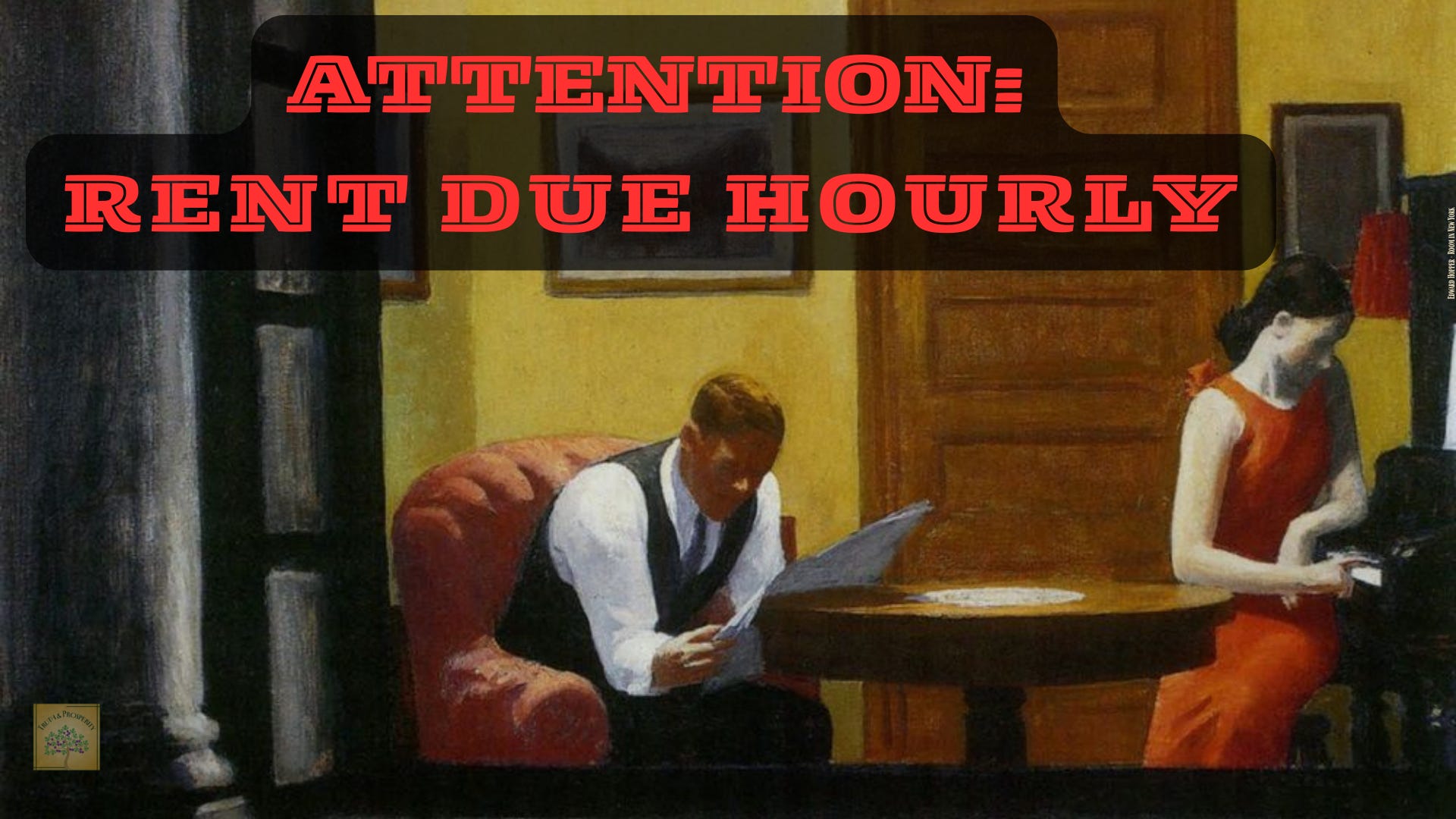
The Rented Mind
The cult of self has a real estate model, and you should understand it, because you are the property.
It wants you reactive. Every platform you open is a furnished room for your attention, rent paid in the seconds turned into hours of your one brief life, decorated by a stranger, optimized by a machine, and bulldozed the moment a louder tenant comes along.
Researchers who study interrupted work have found it takes a man roughly twenty-three minutes to return to a thought after a single interruption. Now count your interruptions before breakfast.
A man whose mind lives in rented rooms builds nothing there. The landlord keeps rearranging the furniture.
This is an ancient problem. When you rent out the rooms of your mind, you can’t be watchful. The inner gate has already been breached.
“Keep thy heart with all diligence; for out of it are the issues of life.” (Proverbs 4:23)
A wandering mind is an open door in a city wall.
And here is what almost nobody tells you about the men who solved this problem millennia ago: they wrote things down.
The prophet was commanded directly: “Write the vision, and make it plain upon tablets, that a herald may run that readeth it.” (Habakkuk 2:2)
The great natural philosopher, Aristotle, encouraged observation, record-keeping, reflection, and systematic organization of ideas.
Marcus Aurelius governed an empire by day and kept a private notebook by night that he intended no one to read; we call it the Meditations.
The Philokalia, the great Christian anthology of watchfulness, is a curated vault, compiled and kept by monks who refused to let a thousand years of hard-won attention evaporate.
The men who built inner lives that outlived them gave their thoughts a home.
So here is the principle this whole essay hangs on: An unwritten thought is a door left open; write your thoughts down to weigh, keep, or cast them out.
This is what a written page does. A goal becomes a commitment. A temptation written becomes a pattern you can name. A fear becomes a question you can bring to God. You weigh, store, and order your thoughts.
A Word From a Man With Ink on His Hands
Admittedly, I love to write, journal, and plan on paper. Systems are my trade, and missed details cost real money and jobs, and I tell you the most important system I run does not belong to any employer.
It is a small stack of books, one piece of software, and a rule of life that holds them together.
I carry a pocket prayer book and what I call a watchfulness (neptic) journal on my person, everywhere, the way other men carry a phone. A Codex, a bound book of my most important insights, handwritten, and that is the book that goes with me to discipleship lessons with my Father Confessor. A gratitude journal full of stickers and stories, written in plain language on purpose, for my children and grandchildren to hold in their hands one day. And for the working life, the meetings, the projects, the essays (including this one), the book I am writing, I keep a digital vault.
This keeps me ordered.
Your stack will look different from mine. It should. What follows is a framework. The tools serve the need. The need is what matters.
The Five Needs for an Ordered Mind
Every man who wants to govern his inner life has five recurring needs. Different tools can meet more than one of them. The same tool, used poorly, meets none.
Know your needs first. Then pick your tools.
1. Capture
Your mind is a horrible storage unit. The first need is a single trusted place where every loose thought, idea, task, and observation lands the moment it arrives.
The medium matters less than the trust. A pocket notebook. A single note on your phone. Obsidian open on your go-to device. What matters is that your mind learns, reliably, that captured thoughts do not get lost. Once the trust in the capture system is built the mind will stop waking you at 2 AM to recite the list.
This is ancient watchfulness in practical terms.
A thought arrives at the gate. The watchman writes down its name. The gate stays guarded. Nothing enters unexamined, and nothing important disappears.
2. Examine
Capture is the beginning. Examination is the practice.
You can weigh a written thought. A temptation named is no longer nameless. A pattern you can see is a pattern you can take to confession, to prayer, to the guides in your life.
Unexamined thoughts are movements seeking entrance, and an unguarded inner life is an open door to the enemy.
Writing about what is actually going on inside you (the fear, the failure, the recurring sin) creates a cognitive distance from the experience. You stop being inside it and start being able to see it, spiritually and factually. The distance is the only place where repentance can live. It is where an honest conversation with God begins.
This is the need your watchfulness journal meets. Some men keep it separately in a planner or other tool. Some fold it into their pocket journal, as I do. The tool is secondary. The examination is the point.
3. Distill
Not every thought that survives examination belongs in a permanent record. But some do.
There is a category of insight that only comes through battle: the truth you did not believe until you lived it, the lesson your failure actually taught you, the moment the Scripture stopped being words and became something you understood in your body. This belongs somewhere it will not get lost in the daily flood.
This is the need my Codex meets. It is a record of battles fought and insights earned. Marcus Aurelius filled his notebooks with exactly this kind of distilled truth, things he knew he needed to say again and again to himself until they were real. Many a saint’s diary is the same: observation, prayer, and hard-won understanding that allowed them to return to, refine, and live more deeply.
A man with a Codex is building something. He is accumulating earned wisdom that he can hand to a son, give to a spiritual brother, or simply return to on the morning everything feels uncertain.
4. Remember
A man has appointments and projects. Promises to his wife, deadlines for his team, a book he’s writing, and a house that requires a new roof before October all weigh on him. He needs a place to hold all of that so his mind is free to think rather than to track.
This is the practical need. But a planner is also a stewardship tool, a form of faithfulness. The man who keeps his commitments, who shows up prepared, who finishes what he starts, who remembers what he promised, is a man his family and his team can trust.
For men who have never built a planning habit, the Full Focus Planner is a quality on-ramp although pricey. It provides various podcasts and support for learning an established planning process. It connects quarterly goals to weekly priorities to daily actions in a guided structure, and it includes prompted reflection that helps a man see his life whole rather than in disconnected fragments. And has an eco-system of podcasts and training. It is not the only tool. A simple planner works. A legal pad works. What does not work is carrying it all in your head and hoping.
Gratitude lives here too, woven through the practice. Many planners and journals prompt it deliberately, and they are right. The man who reviews his week and names only what went wrong is not seeing his week clearly. Gratitude is accuracy. It is the posture of thanksgiving (the Eucharistic life), seeing life as a gift, that keeps planning from becoming mere productivity and remembering from becoming mere logistics.
5. Execute
A captured thought that never becomes action is just organized clutter. A distilled insight that stays in the Codex and never shapes a decision is empty philosophy. The ordered mind has to close the loop: weigh the thought, keep what is true, and then act.
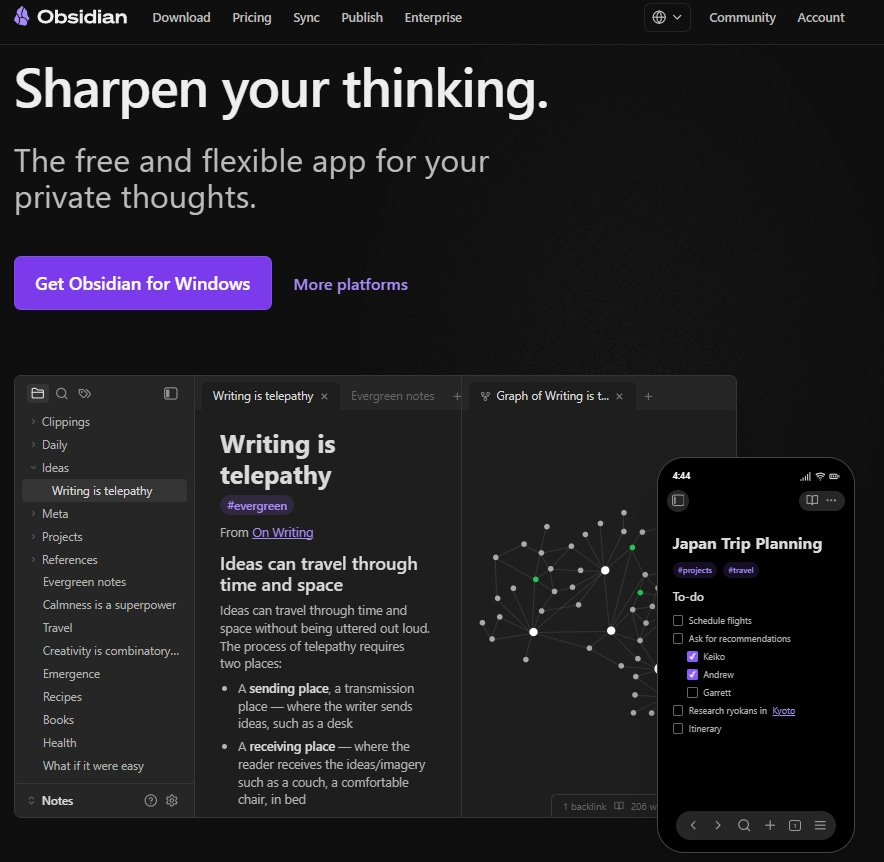
For my working life, this is where Obsidian lives, using tasks and notes captured, remembered, and logging execution. It is a free piece of software built on a principle worth trusting: your notes are plain text files, on your own machine, owned by you, readable in fifty years, with no algorithm deciding what you see and no company holding your thinking hostage. Every project, every meeting, every chapter of the book I am writing lives in one vault that links the way a mind actually works. Built from twenty-five years of planning, leadership, and experience. It is powerful because of what went into it, not because of what the software does by itself.
It is a tool. A powerful tool in the stack and the most replaceable. If it vanished tomorrow, I would lose some convenience and none of the practice, The practice was never in the software. The sages and philosophers had no apps. The desert monks who guarded their minds, wrote things down, and built innner lives we are still reading twelve centuries later.
The cult of self would love for you to spend the next month researching note-taking systems. It is a substitute for the work. Instead, pick up a pen tonight, write three things you will execute tomorrow, and check them off as you complete them. Repeat. Repeat. Repeat.
The Pitfalls and the Grace
Three ways this goes wrong, because I have done all three.
The new system becomes the new scroll. Tinkering with your setup feels like work and costs like entertainment. If you have rebuilt your folder structure three times this month and written nothing true in it, the tool has become the distraction it was supposed to cure.
The vault becomes a museum. Pages of captured quotes and clipped articles, none of it weighed, none of it acted upon. A full notebook and an unchanged man. Capture is the beginning of the practice. Examination is the practice.
The blank page becomes a judge. You miss a week and the empty pages accuse you, so you quit. Brother, the Fathers fell down daily, and the whole of their counsel was the same two words: begin again. A journal with gaps in it is the journal of a real man living a real life. Write today’s date and keep going.
A Few Tools Worth Knowing
Here is what I actually use and what I hand to men who are starting from scratch.
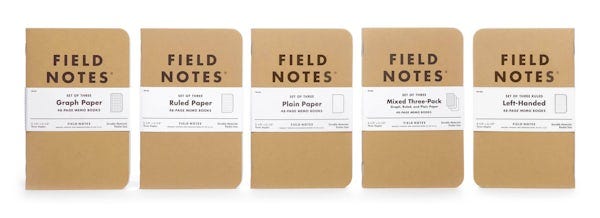
For the pocket: Field Notes 3.5 x 5.5 memo books, American-made, unpretentious, cheap enough to write in without reverence. I keep mine inside a leather cover alongside a pocket prayer book. It goes everywhere. It is the most important piece of the stack and the least expensive.
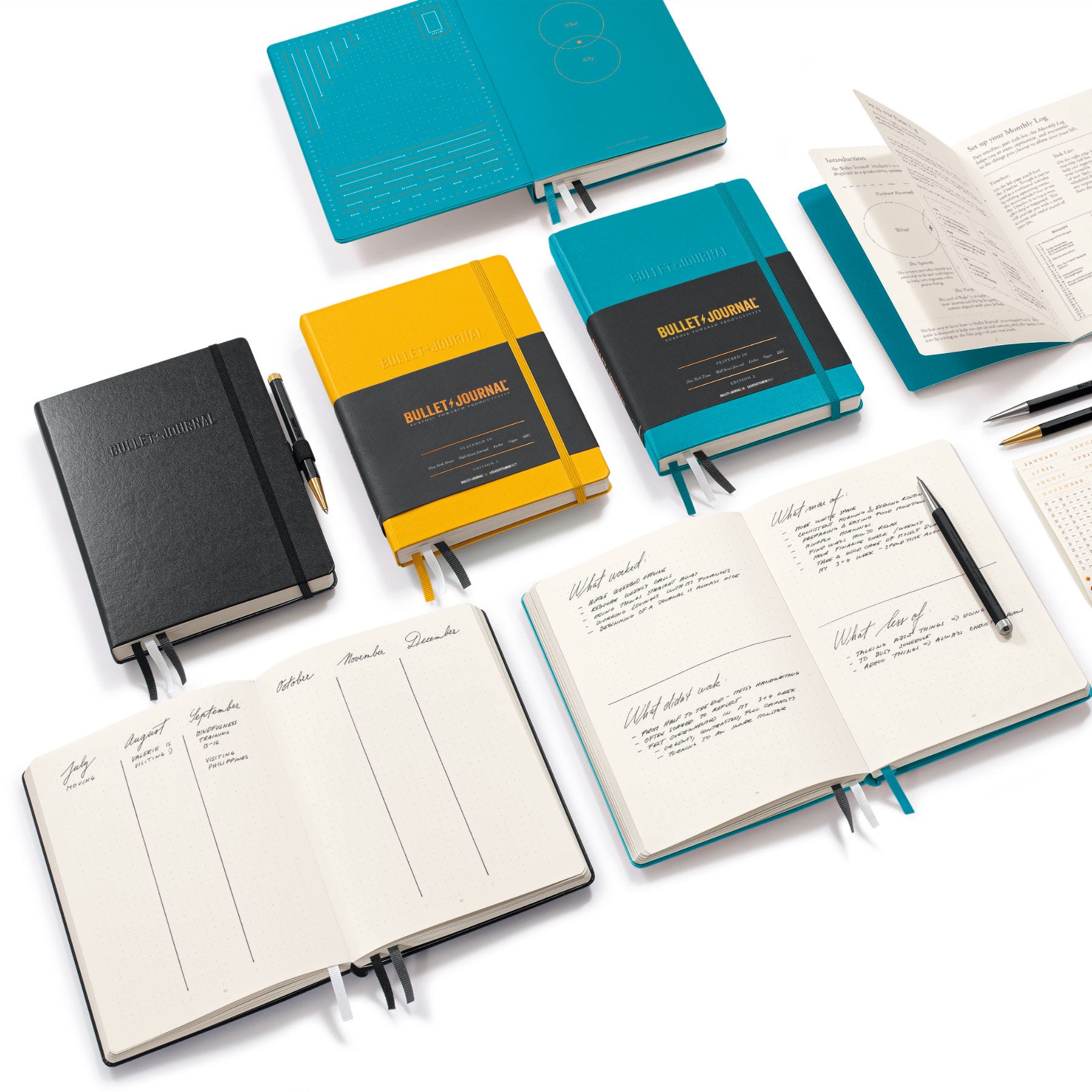
For the Codex: The Leuchtturm1917 Bullet Journal is what I use. Ignore the system if you want. Use the journal. Numbered pages, three ribbon markers, heavy paper, built to last. It is a serious book that takes serious ink.
For men who have never planned deliberately: The Full Focus Planner by Michael Hyatt is the best on-ramp I know. It connects your goals to your weekly priorities to your three most important daily actions. Guided videos walk you through it. I have handed this to more struggling men and women than I can count. It also prompts gratitude and weekly review, which matters.

For simpler planning: Any ruled notebook with a weekly spread works. The method matters more than the brand. If the Full Focus feels like too much, start with a legal pad and three questions: What must happen this week? What am I grateful for? What did I learn?
For the working life: Obsidian is free, runs on your machine, stores plain text files you will be able to open in fifty years, and has no algorithm deciding what you see. It has a learning curve and is not the place to start. If you have a complex planning, tracking, scheduling, journaling system handling multiple areas of life, it will pay dividends to the man who puts serious thought into it.
For the gratitude journal: Find something you will not want to put in a drawer. Mine has Bible verses printed on the pages and gold-foiled edges and is now covered in stickers. It was a gift. Your grandchildren will hold it someday. Buy accordingly.
The Line in the Sand
Nearly every system around you engineers itself on the assumption that you will never organize your own mind. The feed is betting on it. The advertisers are betting on it. The whole furnished-room economy of modern attention is betting that you will keep renting forever.
The world needs men who govern their own minds, on ground they own, before God.
A man like that is valuable in any culture and able to stand firm against the headlines of a decadent age. His wife gets his actual attention. His children watch him close a notebook and look up, fully there. His decisions get cleaner because his thinking has a place to happen. And when he dies, he does not just leave assets. He leaves pages. A Codex that shows his sons that wisdom was real in their house. A gratitude journal whose pages prove their father saw his life as a gift and said so. The written witness that their father lived awake.
Forty years of scrolling leaves nothing behind.
Forty years of writing leaves a library.
Start tonight. One notebook, one honest page, one prayer before you write. The vision is waiting to be made plain upon tablets.
Build a legacy death cannot take.
If this resonates, the rest of Truth & Prosperity is built for men walking this same road. Faith, family, finance, legacy. One letter a week. No fluff.
Subscribe. Get the free Legacy Audit. Start building a legacy death cannot take.
Not ready yet? Start with the foundational essay on the cult of self. Read that core piece and decide for yourself whether this is the voice you want in your life.
The line "an unwritten thought is a door left open" is going to stick with me. I've always treated journaling as a nice-to-have, but framing it as watchfulness — actively guarding the gate rather than just venting — reframes the whole practice. Thanks for this.
Good tips for remembering what matters!