

A woman walked back into her hometown after 10 years and told the people who had known her all her life to stop using her name.
“Don’t call me Naomi,” she told them. “Call me Mara.”
Naomi means pleasant. Mara means bitter.
She had left that town with a husband and 2 sons. She came back with funerals behind her for all 3, no money, no land she could work, and one foreign girl walking beside her that the whole town would rather she had left behind.
The neighbors did what neighbors do. They stirred. They talked. Is that Naomi?
She answered them, “I went away full, and the Lord has brought me back empty.”
She was right about leaving full. She was wrong about the coming back empty; but she could not see it. The answer to her emptiness was standing 3 feet away, and she had spent the road home trying to send her away.
Our Culture’s Slogan 3,000 Years Ago
It helps to read Ruth knowing what preceded it.
Judges is the darkest book in the Bible.
Murder, human sacrifice, a civil war, a man who dismembers his concubine and mails the pieces to the 12 tribes. God’s own people behaving worse than the nations they were sent to displace.
The book ends with a diagnosis, 1 sentence long:
“In those days Israel had no king; everyone did as they saw fit.” (Judges 21:25)
Please stop. Read that sentence again. Notice we can say the same thing about our culture today.
This is the cult of self written 3,000 years ago. No king. No authority above. Every man is the judge of his own life, doing what seems right to him, calling the result freedom.
Scripture shows us what a country looks like after a few generations of serving the self. The book of Judges unfolds like a horror story.
Now, into that landscape, drop a beautiful love story.
Ruth. 4 chapters. 85 verses. No miracles. No prophets. No armies. A famine, a few funerals, a barley field, and a handful of ordinary people who kept covenant when no one was making them.
Ruth is what faithfulness looks like when the culture stops rewarding it.
There is a reason I recommended men start re-learning to read with this book:

The Family Struggle
A famine hits Bethlehem, and a man named Elimelek decides to move.
He takes his wife, his 2 boys, and moves to Moab.
Here is what the original readers of this scripture hear that we can easily miss. The names translated add good context and is how I read the prologu:
A man from the fruitful people (Ephrathites), whose own name means God is King (Elimelek), takes his wife Pleasant (Naomi), and leaves the House of Bread (Bethlehem) in the county of Praise (Judah), during a bread famine, to go live in Moab, with his two sons Sickly (Mahlon) and Puny (Kilion).
Little Miss Sunshine and the boys are moving to Moab.
Note: Moab is not a lateral move. Moab traces its bloodline to Genesis 19, to Lot’s daughters. They watched their city burn (Sodom and Gomorrah), convinced they were the last people alive. They get their father drunk and seduce him.
Bascially, Moab is founded by bastard children from incest.
Psalm 108:9 records God’s own assessment of the place in a blunt image politely translated into “washbasin,” which was the pot you washed your feet in.
Leaving Bethlehem for Moab was not upward mobility!
“No Ammonite or Moabite or any of their descendants may enter the assembly of the Lord, not even in the tenth generation.” (Deuteronomy 23:3)
We will return to this in part 2, but the woman this book is named after, Ruth, is legally excluded from the people of God by written statute. Yet, she ends up great grandmother to King David.
Let’s not jump too far ahead. This is chapter 4, and we are still in chapter 1, where things only get worse.
So, we return to the story. God is King (Elimelek) dies. Little Miss Sunshine is left with Sickly and Puny.
Then the boys married Moabite girls, which is what any good parent prays would not happen. Orpah, whose name means something like fawn. And Ruth, harder to pin down, maybe vision of beauty, or the glamour that previous generations had, perhaps Audrey Hepburn style.
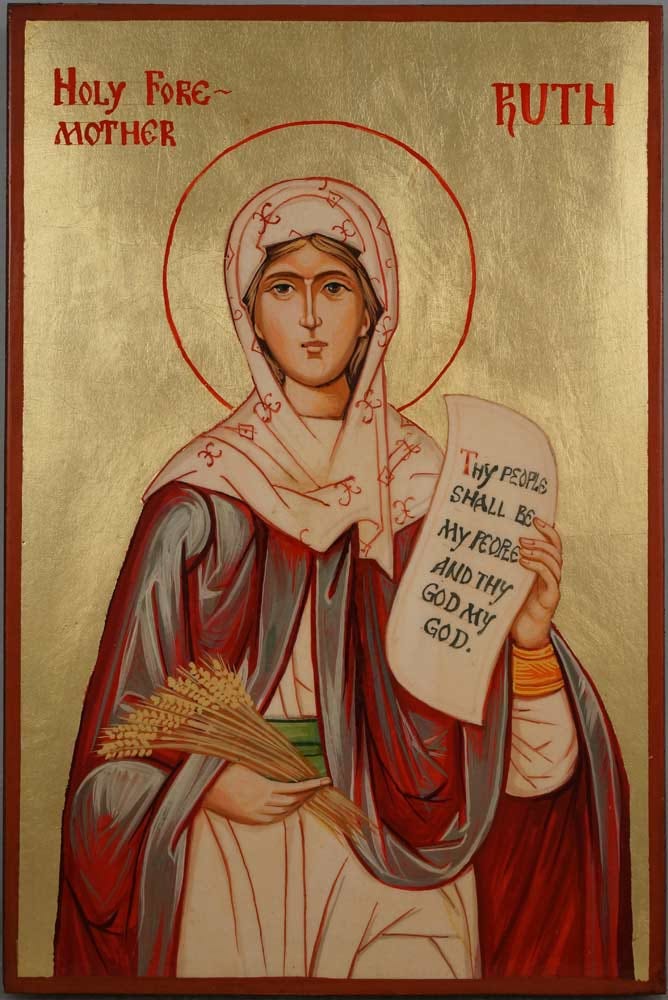
10 years pass. No children.
Surprise, surprise, Sickly and Puny die too.
3 graves in a foreign country. A woman with no husband, no sons, no grandsons, and no legal standing. In a world without pensions, without banks, without state welfare, a woman without men was finished.
Elimelek had moved his household to a place God had cursed in order to survive, it cost him his life and both his sons.
This is a hard thing to hear in a culture that calls this type of life prudence and encourages us to fit in, don’t judge, do what feels good.
Ruth’s Love
Word comes that the famine has broken. Naomi decides to go home.
Both daughters-in-law start out with her, and then Naomi stops on the road and does something noble. She tries to release them.
Go back, she says. Go to your mothers’ houses. I have no more sons to give you, and I am too old to have any. Find husbands. Find rest.
Understand what she is offering them. She is releasing them from the only claim she has left in the world, and she is doing it while she still has the chance to be selfish. She is also telling them the truth about what awaits in Bethlehem. A Moabite woman walking into Judah in the time of the Judges is walking into a town that has a verse about her.
Orpah kisses her and goes home. Orpah does the reasonable thing. She did the thing her mother-in-law told her twice to do. She had a family, a future, a country, and a god, and she went back to all 4. If you graded her by any standard our culture recognizes, Orpah made the sound decision.
Ruth made the other one. Ruth acted selflessly and with great love.
“Don’t urge me to leave you or to turn back from you. Where you go I will go, and where you stay I will stay. Your people will be my people and your God my God. Where you die I will die, and there I will be buried.” (Ruth 1:16-17)
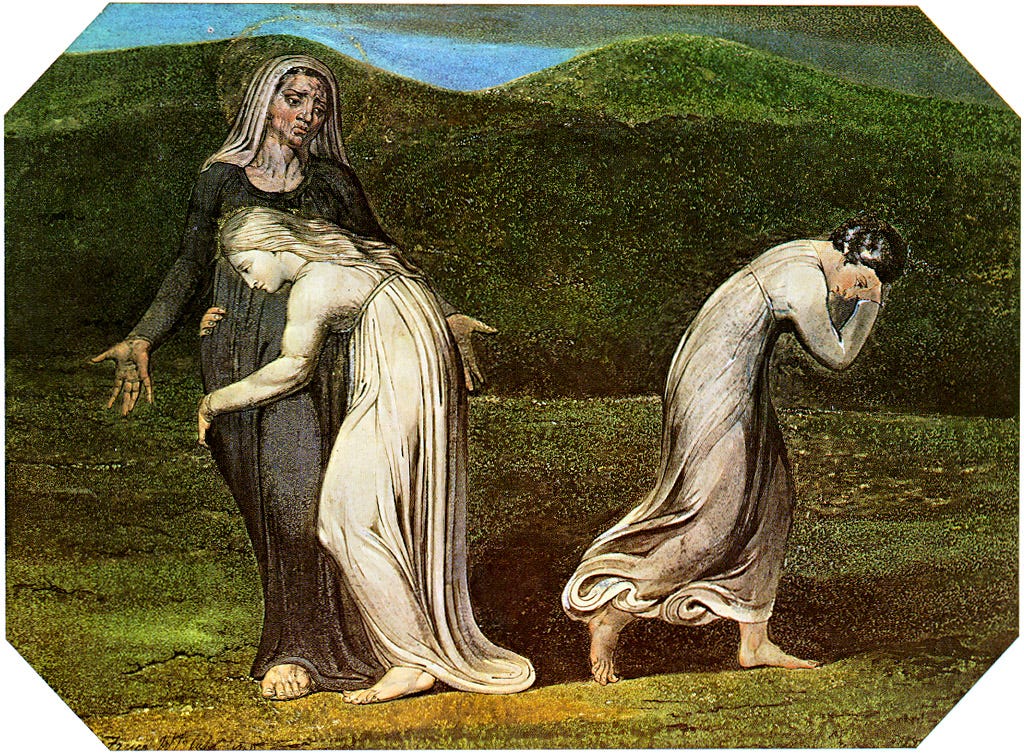
We read this at weddings; my wife has spoken this to me. This was not a wedding. Ruth says this on a dangerous road as a childless foreign widow, to a bitter old woman who had just finished explaining that she had nothing left to give her.
There was no upside here for Ruth. No inheritance. No potential husband. Naomi was not even pleasant about it. The text says she stopped urging and said nothing else to Ruth the entire rest of the journey.
Ruth bound herself to a woman who could not pay her back, in a country that did not want her, under a God she had not known.
“Your people will be my people, and your God my God.”
She says she is joining a people and taking their God as her own. There is no such thing for Ruth as a faith you hold by yourself. Faith is found in community.
This is a catechumen’s confession. It is what it has always sounded like when someone crosses over into Truth.
63 Million People Know What This Costs
There are about 63 million family caregivers in the United States right now, according to the 2025 AARP and National Alliance for Caregiving report. Most of them get nothing for it and very often not much gratitude, because people in pain are frequently not pleasant.
If you are one of these people, you already understand Ruth better than most. If you are not, you probably know who in your family is. They deserve your gratitude and love.
The world has a word for loyalty when no one is watching or repaying. It calls it a waste. Scripture has a different description: covenant kindness.
The cult of self has no category here. Under a creed where your life is your own, Ruth is making an error. She is spending her one irreplaceable life on someone else’s story, and she has no expectation it will be repaid in this world or any other.
She does it anyway; the rest of the Bible turns on this idea.
God’s Poverty Program
In chapter 2, they arrive in Bethlehem as the barley harvest is beginning.
2 widows, 1 a foreigner from the country everyone in town has a slur for, with no man, no land they can work, and no food. They are almost certainly living in something close to a shack on someone’s charity.
But God had already written a plan for them into the law, generations earlier:
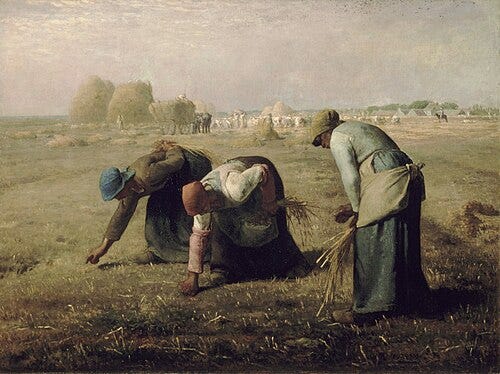
“When you reap the harvest of your land, do not reap to the very edges of your field or gather the gleanings of your harvest. Do not go over your vineyard a second time or pick up the grapes that have fallen. Leave them for the poor and the foreigner.” (Leviticus 19:9-10)
This is a piece of public policy. It feeds the poor, and it makes them work for it.
The edges of the field belong to you if you are willing to go out, bend over, and take the gleanings all day, in the sun, next to people who are being paid. God fed the poor without taking their dignity, which is more than what we manage these days.
The edge of the field is where God keeps showing up. My patron saint (St. Christopher) stands at that same edge, and so does every foreigner in Scripture who ever ended up inside the story.
Ruth had heard about the law. So Ruth went out.
An Important Accident in the Bible
“So she went out, entered a field and began to glean behind the harvesters. As it turned out, she was working in a field belonging to Boaz, who was from the clan of Elimelek.” (Ruth 2:3)
As it turned out.
This is almost comically casual. The author is doing something deliberate. He is writing the single most important coincidence in the book and daring you to call it luck.
A young foreign widow, alone, walking into open fields full of working men during the time of the Judges. The era that produced the worst chapter in the Old Testament about what men did to a woman traveling alone.
Ruth almost certainly tried more than one field. She was probably run off. Somebody surely said something disgusting to her.
She ended up in the 1 field in Bethlehem owned by a relative of her dead father-in-law and they didn’t run her off.
Then the owner shows up.
“Just then Boaz arrived from Bethlehem and greeted the harvesters, ‘The Lord be with you!’ ‘The Lord bless you!’ they answered.” (Ruth 2:4)
Watch how much the author tells you about a man in one exchange.
He is there. He owns land, he has an overseer, he does not need to be in the field, and he is in the field. This is leadership.
Boaz greets the workers first. And they greet him back, which tells you something. Hired men do not bless a boss they resent.
He notices Ruth, asks who she is, and then does far more than the law required. He tells her to stay in his field and follow his women. He tells his men, out loud, that they are not to touch her. He gives her access to the water his own workers drew. He feeds her at his own table and she eats until she is full and has some left over. Then he tells the harvesters to pull stalks out of the bundles on purpose and leave them on the ground for her.
That last one is not gleaning anymore. Boaz was not looking for the minimum the law would accept from him. Boaz is looking after the widows, the poor, and those in need unable to pay him back.
Ruth comes home that night with an ephah of barley, something in the range of 30 pounds. Naomi takes one look at the pile and knows something happened, because that is not a day’s gleaning.
Where did you glean today? Blessed be the man who took notice of you.
Ruth says the name. Boaz.
The Word That Changes Everything
This is the exact center of the story. In a book famous for its symmetry, the hinge verse is right here at the end of chapter 2. Everything turns here.
Naomi hears the name Boaz, and for the first time since the road from Moab, the bitter woman blesses somebody.
“The Lord bless him! He has not stopped showing his kindness to the living and the dead. That man is our close relative; he is one of our kinsmen-redeemers.” (Ruth 2:20)
Kinsmen-redeemer. A legal office with a family obligation attached, and it will take the 2nd half of this story to unpack what it cost a man, and what it means that God took the same title for Himself.
We will do that next Sunday. Subscribe here so you don’t miss the conclusion:
For now, stop where Naomi stopped.
What Chapter 1 Is Actually Asking You
There are no miracles in this book. No grand action scenes. No voice booming out of the sky. God is named by the characters and never appears on the stage.
Everything God does in the book of Ruth, He does through a law someone bothered to keep and a loyalty someone refused to put down.
Feel what this means: the God who is not visibly intervening in your life right now is still at work.
For Naomi, the famine broke.
Ruth stumbled into the right field.
Boaz was checking on his people that morning.
None of this looks like providence to the people living it. All of it was.
Naomi called herself empty, standing next to the woman who was going to be the great-grandmother of King David.
The thing she was most sure had nothing to offer her was the one thing God was using to save her.
Friend, let me ask you the question, the one Orpah and Ruth both had to answer on that road.
Who are you giving to that cannot pay you back?
Your aging father who does not say thank you.
The son who is not speaking to you right now.
The wife who is harder to love this year than ever before.
The parish who needs a man to show up early and stack chairs.
The cult of self has an answer ready for every one of those, and the answer is always some version of you have to look after yourself.
Ruth heard this from Naomi’s own mouth, twice, with a clear road home behind her, and she stayed.
3,000 years later we are still saying her name, every year before the Nativity. (More on that next week.)
This is how you build something that outlives you.
Build a legacy death cannot take.
Part 2, next Sunday. The word Naomi just said, kinsmen-redeemer, what it cost Boaz, and the man at the gate who had everything he needed to be the hero of this story and gets forgotten.
Subscribe to Truth & Prosperity. Get the Legacy Audit free and one article a week, written for men who want their lives to mean something.
Not ready yet? Start with the foundational essay on the cult of self and decide for yourself whether this is the voice you want in your life.