

Every man who loves Band of Brothers hates the same man.
The snide face. The ego. A voice that cracks a little when he yells. Captain Herbert Sobel walks the line at Camp Toccoa, looking for every infraction he can find, and he always finds them. Rust. Dirt. Trousers bloused wrong. A weekend pass canceled over a man’s laundry.
Then, he sends them up Currahee. 3 miles up. 3 miles down. Again. And Again.
You hated him the first time you watched. You still hate him a little now.
So did the men of Easy Company.
The Man Easy Company Hated
Sobel was a bad officer. He was petty, played favorites, and punished the wrong men for the wrong things. In the field, he got lost on maneuvers and confused when he needed to make important decisions.
He even brought charges against Dick Winters, the man Easy Company would later follow anywhere, over a latrine inspection.
Before Normandy, the sergeants had enough. They tried to go over his head to regiment that they would not follow Sobel into combat, risking court martial.
One sergeant who signed the refusal to regiment was Mike Ranney, the same man whose grandson would one day ask, “Grandpa, were you a hero in the war?”
For standing against Sobel, Ranney was busted to private.
Sobel was moved out before the jump. Winters took over the company in France.
Then something happened none of them expected.
The men of Easy Company were good. Better than good. They were fitter than the surrounding companies, harder to break, and sharper under fire. The miserable months in Georgia had built something in them they did not know was there until the shooting started.
Years later, men who had hated Sobel said a thing that surprised even themselves: Sobel made Easy Company.
By being a “petty tyrant,” he made Easy Company. By being a hard person they all had to deal with together, he gave Easy Company a hard season. He forged them into a band of brothers.
This is a strange mercy and one the modern world struggles to understand.
Your Sobel
Every man has one.
Sometimes, it is a man. A father who was hard in all the wrong ways. A boss who humiliated you in front of the people you led. A coach, a drill sergeant, a bank officer who said no.
Sometimes, it is a season.
I’ve had mine. Debt piling up so deep I couldn’t breathe. My car was so bad (a Daihatsu) I had to tape the radiator to keep it from leaking and drove around with a couple gallons of water, hoping to make the next sale.
Once, I even hitchhiked to a sales call.
I was fired and humiliated.
Marriage falling apart.

I would have chosen none of it. You would not have chosen yours.
It took me years to see the following truth.
The firing, the “petty tyrant,” or the hard years do not decide what any of it means.
The story we choose to live inside tells us our worth or what the meaning of those hard seasons was.
For a long time, I was living inside the wrong story.
Now, before you think this is some cult of self drivel, stay with me. Because if you choose a story to live in that is primarily about yourself, you’ll have misunderstood the message.
Three Places a Story Can End
There is an older story than Easy Company, and it holds some keys.
If you’ve been a reader here, you’ll know I like the story of Joseph. He was probably about 17 when his brothers threw him in a pit.
They had wanted to kill him.
They settled for selling him to traders headed for Egypt, dipped his coat in goat’s blood, and let their father believe a wild animal had torn him apart (Genesis 37).
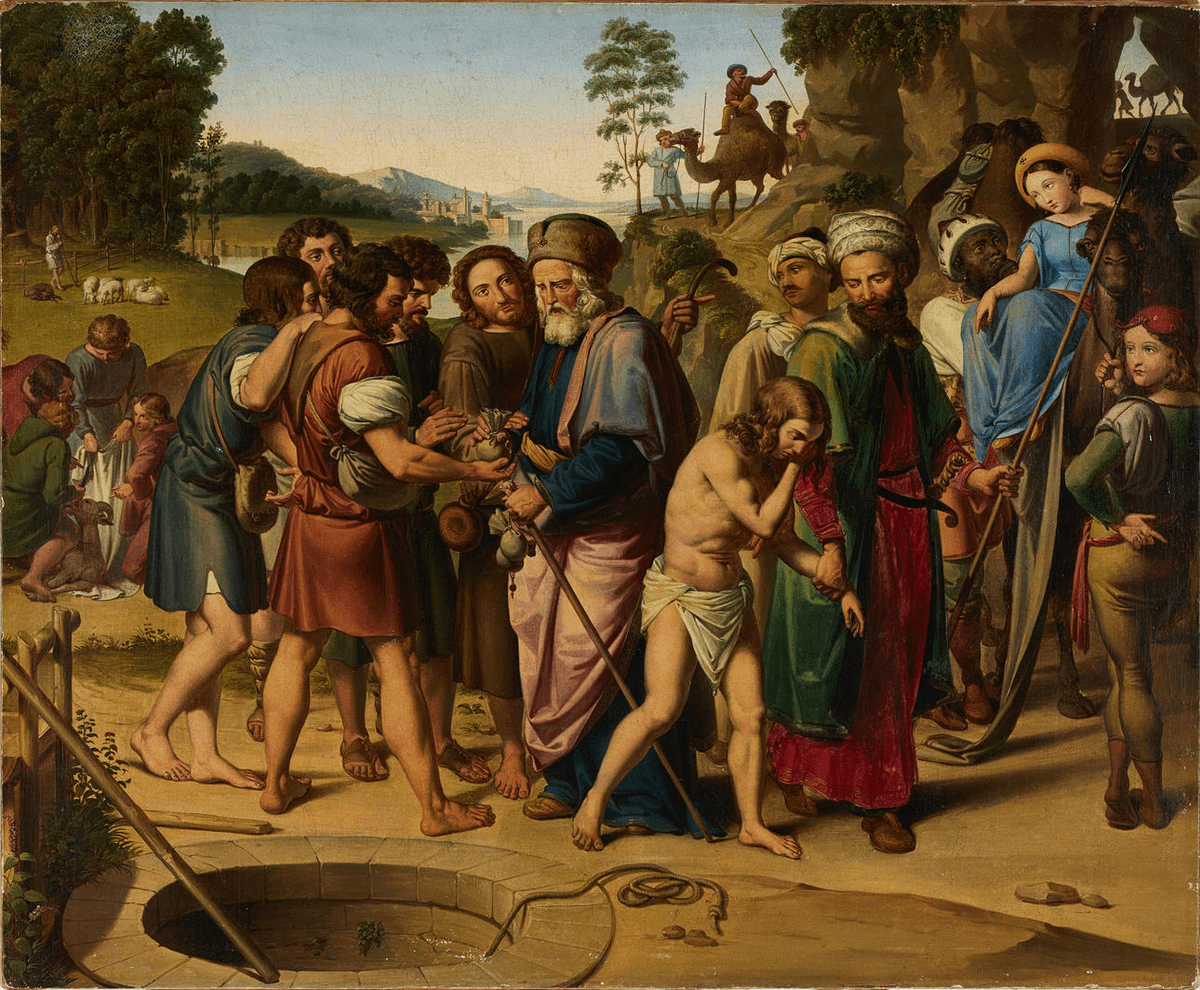
This is the first place Joseph’s story could have ended, the pit. A young man betrayed by his own brothers has every reason to decide that the world is cruel and the people closest to him are the most dangerous. Plenty of men live their whole lives inside the pit and never climb out.
He climbed out.
Then, in Egypt, Joseph rose to run the household of Potiphar, a captain of Pharaoh’s guard. Potiphar’s wife wanted him. Day after day, she pressed. One day she caught him by his garment. Joseph ran out of the house and left the coat in her hand (Genesis 39).
His story could have ended in that bedroom. Sin could have undone him.
His brothers could sell Joseph. A liar could ruin his reputation. A king could chain him. But none of that could destroy him. Only Joseph could destroy himself by his own choice, in that bedroom.
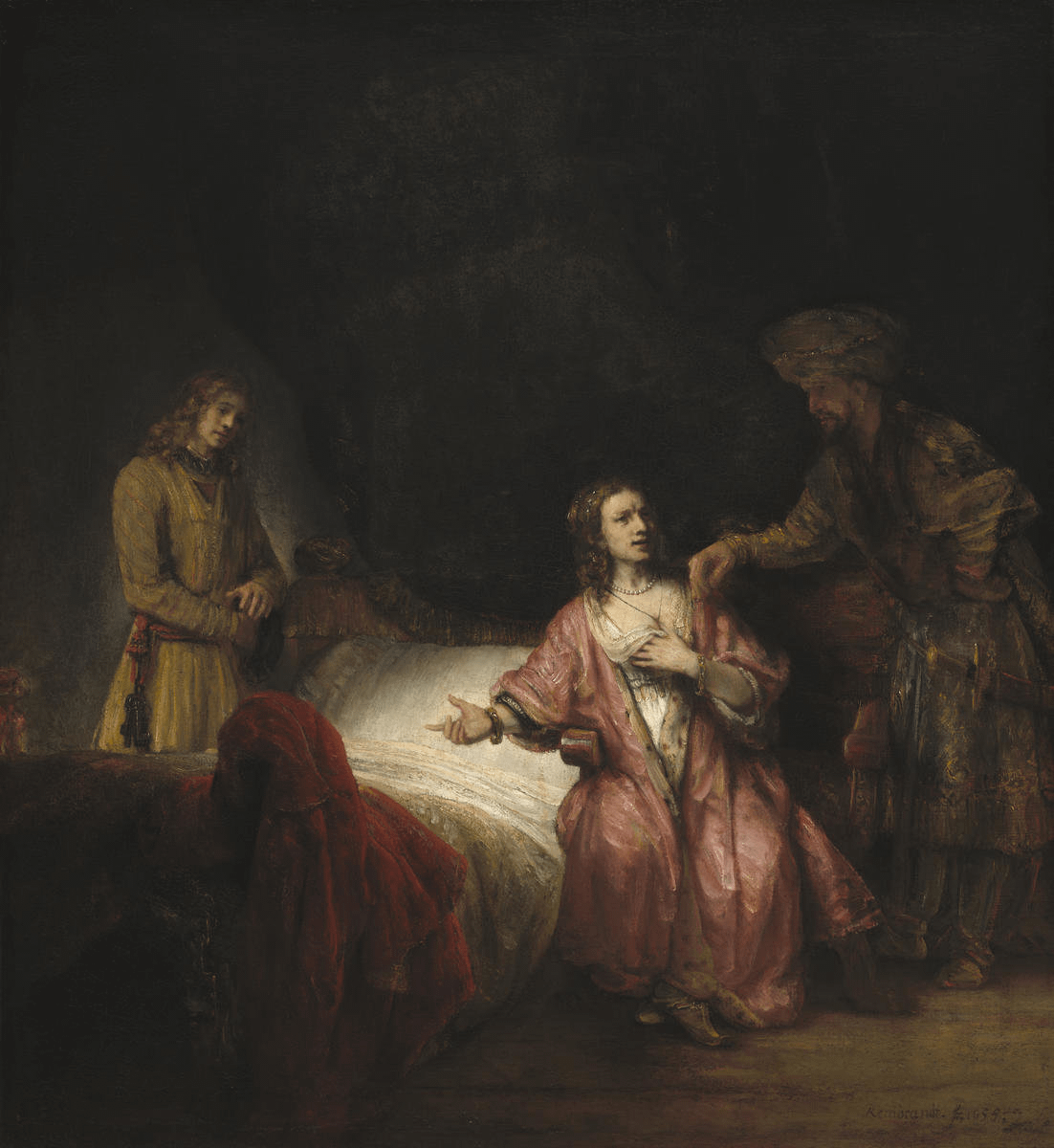
He ran. For running, he was thrown in prison on her lie.
The third place was in prison. Joseph interpreted a dream for Pharaoh’s cupbearer and asked one thing, “Remember me.” The cupbearer walked out free and forgot him for 2 years (Genesis 40:23 to 41:1).
3 possible endings.
Despair in the pit, sin in the bedroom, and bitterness in the prison.
Joseph refused all 3.
The Names of His Sons
Eventually, Joseph became second in power of all Egypt answering only to Pharaoh. He received the blessing of 2 sons. In the ancient world, a man named his child with the story he wanted to tell.
Joseph named his first son Manasseh: “For God has made me forget all my toil.”
He named his second Ephraim: “For God has caused me to be fruitful in the land of my affliction” (Genesis 41:51–52).
The land of my affliction.
He did not rename the pit or the prison. He did not pretend what his brothers did to him was just. Or that Egypt wasn’t a place of suffering for him. Joseph told the truth about what happened to him.
He also told the truth about what God did with the suffering.
Every time someone called his sons, Joseph heard his own story, told the right way. God has caused me to be fruitful.
Years later, when his brothers stood in front of him terrified he would finally take his revenge, Joseph summed it all up:
“You meant evil against me, but God meant it for good, in order to bring it about as it is this day, to save many people alive.” (Genesis 50:20)
Note: He did not call his brothers good or say what they did was ok. He said it was evil. He said God was bigger than it.
This is the story he told about his past. It made him a man who could feed a nation and forgive the men who sold him into slavery.
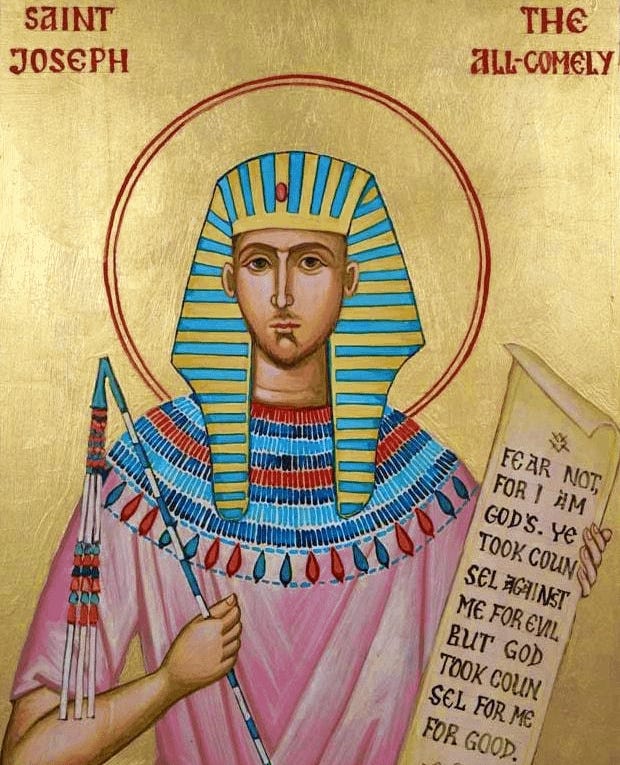
Two Stories on Offer
Every man who has been to the bottom gets handed two stories on the way back up.
The first is the victim story. It happened to me. In this story, you are the center, and every bad thing in your life is a wound with someone’s name on it. The boss who fired you, a distant wife, or the father who was never satisfied.
The second story is just the inverse of this. You’ve had hard times, a hard season. But you’ve come out on top. You’re the hero. You’ve overcome all the odds and made it. Whatever that looks like.
These stories are true, perhaps, as far as they go. They are simple, and it makes them easy to live inside.
The cult of self sells either frame in the same way. Protect your peace. Cut off anyone who hurt you. Your trauma explains you. You can overcome and author yourself.
Run Joseph through this program and see what you get: The brothers get cut off. The father who played favorites gets the blame. Egypt becomes a wound he spends his life nursing. He was owed Potiphar’s wife. He grabbed for himself instead of letting God be the cause of things. The result: A nation starves because the man who could have fed it was too busy being the injured party or the hero.
Both stories are traps because both stories are about you.
There is a story bigger than you.
In this story, you are one man among many inside a story God is telling. The pit, the lie, and the forgotten years belong to a plot you cannot see from where you are standing. You still suffered. It still mattered. But it is not the complete story, and you are not its center.
Joseph could not choose the pit. He could not choose the lie or the two lost years. What he could choose, and what every man can choose, is which story to live inside. He chose the bigger one. To save many people.
I wrote years ago that what matters most about your past is how you perceive it. The events are fixed. The story you live inside is a choice. Refuse to make it, and your worst night, or the people who hurt you, will make it for you. You will believe it, and you will live it.
Researchers have found the same thing. Northwestern’s Dan McAdams interviewed 157 adults in their mid-fifties and asked them to tell their lives like a novel. The ones who told redemption stories, where suffering turned into something good, were the same ones most committed to the next generation. The men who could say fruitful in the land of my affliction were the men building something that would outlast them.
The story you live inside decides whether your Sobel made you or broke you.
Write the Story
This is the assignment. It’ll take a few minutes. Get a pen and paper.
1. Remember it truthfully. The firing, the marriage that nearly broke, the year you were at your end. Write what happened, when, and who was there. Facts, no adjectives. Joseph never pretended Egypt was anything but the land of his affliction.
2. Own your part. Write what you carried into the pit. Joseph walked into his wearing a coat of favoritism and telling dreams. Easy Company hated Sobel, but they still had rust on their rifles. Not all of it was yours. Some of it was. Confession comes before blessing.
3. Forgive by name. Pray for the man who hurt you by name, as Christ told us to (Matthew 5:44). Forgiving doesn’t make it good. Joseph called it evil, and then he kissed his brothers and wept over them (Genesis 45:15). If you can’t forgive yet, ask God for the willingness. That’s a real prayer, too.
4. Give thanks. Write one thing the hard season gave you that you wouldn’t trade back, and thank God for it out loud. St. John Chrysostom died in exile, driven there by the powerful. His last words in 407 A.D. were “Glory to God for all things.”
5. Feed someone. Joseph fed a nation. Name one man going through what you went through and call him this week. Listen. Tell him the true story: the pit, and what God grew from it in your life.
Then, ask the hard question: Am I someone’s Sobel? Am I hard on my son, my crew, or my community for their good, or for my temper, pride, or ego? Sobel never asked. You can.
The Company You Owe
Easy Company didn’t choose their Toccoa. They didn’t choose Sobel. They climbed his mountain together and became brothers.
Joseph did not choose his pit. He chose what to call his sons.
You did not choose your Sobel. But you are choosing, today, what story he is part of.
Someday, a younger man will sit across from you in the worst season of his life. He will have been fired, betrayed, or brought to his end. You will have a choice to make about what you tell him.
Tell him the true story.
Tell him about the land of your affliction, and what God grew there.
Build a legacy death cannot take.
Subscribe. Get the Legacy Audit. Start building a legacy death cannot take. Then send this one to the man who is in his pit right now.
Missed last week? Start with the piece that started this series:
The Company of Heroes

If you’re like me, you’ve seen it more than once. I have the DVD set, so it’s lot more than once. Maybe you put it on every fall when the air turns cold.