

In the 4th chapter of Ruth, a man had every single thing he needed to be the hero of this story.
He had the legal right. He had the money. He had the family standing. He was first in line, ahead of Boaz, and everyone at the town gate knew it.
He said, “No.”
The Bible calls him roughly “so-and-so.” Or my interpretation, Mr. What’s-His-Name.
10 elders of the town sat down to witness the most consequential property transaction in the history of the Kingdom of God, and the author of Ruth looked at the man who walked away and decided he was not even worth a name.
Mr. What’s-His-Name’s reason is recorded.
“I cannot redeem her because I might endanger my own estate.”
If you’ve been reading my writing, you know where this is going.
Hold this thought.

The Story So Far
Last Sunday we went through the 1st half of this book, and if you missed it, here is everything you need:
A famine drove a man from Bethlehem into Moab, where he died, then his 2 sons died, and his wife Naomi came home 10 years later with a Moabite daughter-in-law named Ruth who refused to leave her.
Ruth went out to glean in the barley fields under a law that told landowners to leave the edges of the harvest for the poor and the foreigner. She happened into the field of a man named Boaz, who did considerably more for her than the law required.
Here’s the full story:
She Had Every Reason to Leave - Ruth, Part 1

A woman walked back into her hometown after 10 years and told the people who had known her all her life to stop using her name.
When Naomi heard his name (Boaz), the story turned.
“That man is our close relative; he is one of our kinsman-redeemers.” (Ruth 2:20)
Kinsman redeemer. This is everything.
What is a Redeemer?
We have made “redemption” a church word. Yet, it is a legal word, too.
2 statutes define the office.
“If brothers are living together and one of them dies without a son, his widow must not marry outside the family. Her husband’s brother shall take her and marry her and fulfill the duty of a brother-in-law to her. The first son she bears shall carry on the name of the dead brother so that his name will not be blotted out from Israel.” (Deuteronomy 25:5-6)
“If one of your fellow Israelites becomes poor and sells some of their property, their nearest relative is to come and redeem what they have sold.” (Leviticus 25:25)
The kinsman-redeemer buys back the land and takes responsibility for the widow, and the first son of the union is legally counted as the dead man’s son and inherits the dead man’s property.
You can run the math on this; surely Boaz did.
The redeemer pays full price for a field. He then raises a son who is not legally his, who will inherit the field he just bought, along with a share of the redeemer’s own estate. He spends his capital and receives no assets. He adds a household to feed.
His reward?
Another man’s name does not disappear from the Kingdom.
What do you think of that deal?
You pay, and someone else’s name survives.
This sounds foreign today because we live in nuclear families. We’ve tried to tear down the patriarchy. Yet, the ancient world survived on extended families. Grandparents, parents, brothers, wives, children, all under 1 roof and 1 economy, because this is what it takes to build a life that will outlive you. Our forefathers understood this. We have forgotten.
You married into a household. The household does not stop being yours because of death. This protects the weak and innocent.
Now back to Redemption: True redemption is a purchase with no return on it. Every redemption in Scripture is someone paying for something that will never make them a return.
The Threshing Floor
Picking back up the story of Ruth, we come to the end of the harvest.
With the end of the harvest, the reason Ruth sees Boaz every day will end, too.
Naomi makes a plan.
“Wash, put on perfume, and get dressed in your best clothes. Then go down to the threshing floor, but do not let him know you are there until he has finished eating and drinking. When he lies down, note the place where he is lying. Then go and uncover his feet and lie down. He will tell you what to do.” (Ruth 3:3-4)
The harvest is in; the men are guarding the grain pile overnight. There has been a party. There has been wine. This passage, with lie down, uncover, and feet carries loaded, deliberately suggestive sexual weight. The original reader leans forward, expecting drama.
Personally, I feel Naomi is scheming. I think she dresses her, perfumes a young widow, and sends her to a wealthy man late at night after he has been drinking. It reads as if she is taking matters into her own hands. Naomi has been bitter for 2 chapters. Bitter people manage outcomes. (Note, however, that the church Father’s also see the dressing and anoint with oil as a prefiguration of baptism and chrismation. They read Naomi with less scheming and more charity.)
None-the-less, Ruth acts with restraint and virtue. Invoking a formal, legal, and bold claim on a kinsman’s duty, at the one moment and place she could get him alone to do it.
Ruth obeys her mother-in-law. She goes down, waits, uncovers his feet; she lies down and does not say a word until he wakes.
“Who are you?” he asked. “I am your servant Ruth,” she said. “Spread the corner of your garment over me, since you are a kindsman-redeemer of our family.” (Ruth 3:9)
She asks him to cover her, using covenant language. The phrase “spreading a garment or a wing over someone” is the language God uses for Himself. It is what He says over His people in Ezekiel 16:8. It is under His wings that Boaz himself said Ruth had come to take refuge, back in chapter 2, before he had any idea he would be the one asked to do the covering.
Ruth asks Boaz to become the answer to his own prayer for her.
As for Boaz, waking in the dark with a young woman at his feet, with wine in him, no witnesses anywhere, what will he do?
He blesses her, telling her not to be afraid. He tells her that the town knows she is a woman of noble character. Boaz informs her, there is a nearer redeemer with a prior claim. He tells her to stay until morning because the roads are not safe. He sends her home before daylight so no one can gossip, and he loads her shawl with 6 measures of barley so that a woman walking home at dawn has a reason to have been out.
He protected her honor when no one was watching.
This is the measure of a man: in the dark with no one watching he chooses virtue.
The Gate
Boaz goes to the town gate, which was the courthouse of the age, and waits. The other redeemer shows up. Boaz calls 10 elders. He lays out the claim shrewdly.
1st, the land. Naomi is selling the field that belonged to Elimelek. You are first in line. Will you redeem it?
The man does not hesitate. “I will redeem it.”
Of course, he will. A field is an asset. It appreciates. It produces. A field is a good deal.
Then Boaz adds the 2nd half in front of 10 witnesses.
“On the day you buy the land from Naomi, you also acquire Ruth the Moabite, the dead man’s widow, in order to maintain the name of the dead with his property.” (Ruth 4:5)
And Mr. So-and-so responds.
“Then I cannot redeem it because I might endanger my own estate. You redeem it yourself. I cannot do it.” (Ruth 4:6)
There it is! 3,000 years early, in one sentence, at a courthouse gate in Bethlehem.
I might endanger my estate.
He is a normal man. He is right about the finances. The transaction is genuinely bad for him, and he can read a balance sheet. He does the sensible thing, the defensible thing, the thing any advisor would tell him to do, and any reasonable man would have nodded along.
The cost of being sensible is that we do not know what to call him; history has forgotten his name.
Here is what the unnamed man is: he is every man who protects himself above all.
He is the cult of self standing at a gate with a checkbook, doing the math, declining to spend himself on a story that will not pay him back. He is taking care of himself. Avoiding the drama of the widow from the gritty neighborhood next door.
He is careful.
Carefully, writing himself right out of the pages of Scripture.
Boaz did the arithmetic, too. He got the same answer. He paid anyway.
“Today you are witnesses that I have bought from Naomi all the property of Elimelek, Kilion and Mahlon. I have also acquired Ruth the Moabite, Mahlon’s widow, as my wife, in order to maintain the name of the dead with his property, so that his name will not disappear.” (Ruth 4:9-10)
So that his name will not disappear.
Boaz spent his estate to ensure that a dead man he was barely related to retained a name in the Kingdom of God.
Law Is Not the Enemy of Grace
Here is the thing about Boaz. Every good thing he does in this book, he does because of the law.
He leaves the edges of his field because God commands it in Leviticus.
He lets a Moabite glean there because the law said the foreigner eats, too.
He protects her because the law lays out emphatic protection for a woman.
He redeems her because Deuteronomy laid out the office.
He conducted the whole transaction properly at the gate with witnesses.
Yet, Boaz went past the basics of the law because he loved the God who wrote the law.
Psalm 119 is a long, patient, almost embarrassing love song about statutes and decrees, and someone like Boaz wrote it:
“I rejoice in following your statutes as one rejoices in great riches. I delight in your decrees; I will not neglect your word.” (Psalm 119:14, 16)
The law is not opposed to grace. It is a means of grace.
I wrote those sentences years before I was Orthodox as a line in a protestant sermon of mine that I would not change as my faith has deepened.
The commandments are not a ledger God keeps against you. They are the shape of a life in Christ, handed down by the One who built our world, and the man who delights in them is being formed by God.
The unnamed man at the gate obeyed the letter perfectly. He was entirely within his rights. He kept the law and lost the story.
Boaz kept it from the heart. This is the difference between a man who is legal and a man who is good. It’s a matter of the heart!
Obed
Boaz married Ruth. She bore a son, and the women of the town said something remarkable to Naomi.
“Praise be to the Lord, who this day has not left you without a kinsman-redeemer. He will renew your life and sustain you in your old age. For your daughter-in-law, who loves you and who is better to you than seven sons, has given birth.” (Ruth 4:14-15)
Better than 7 sons! In that culture there was no higher thing you could say about a person, and they said it about a Moabite.
Naomi, who came home telling the whole town to call her Bitter, ends the book with a child in her arms.
They named him Obed. Obed had a son named Jesse. Jesse had a son named David.
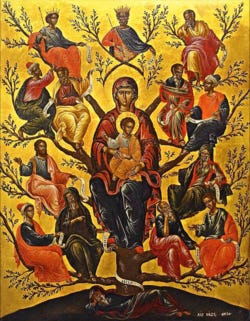
And 1,000 years after that, a tax collector sat down to write the first chapter of The Gospel of Matthew and opened it with a genealogy.
“Salmon the father of Boaz, whose mother was Rahab, Boaz the father of Obed, whose mother was Ruth.” (Matthew 1:5)
Boaz and Ruth in the first paragraph of the New Testament.
70% of family wealth is gone by the 2nd generation. 90% by the 3rd. Money can be massive, but if the formation is small, it will turn out like the unnamed man’s careful, defensible, well-advised estate. Forgotten.
Ruth and Boaz gave without expecting a return and will forever be remembered. The built family wealth that is eternally in the line of the King of All.
We Have a Kinsman-Redeemer
Nowhere else in Scripture is the office of redeemer laid out in full. Only here, in a little book about a barley harvest and a widow from Moab.
The office has three requirements:
He must be kin. The redeemer has to be family. An outsider cannot redeem you no matter how rich he is or how much he pities you.
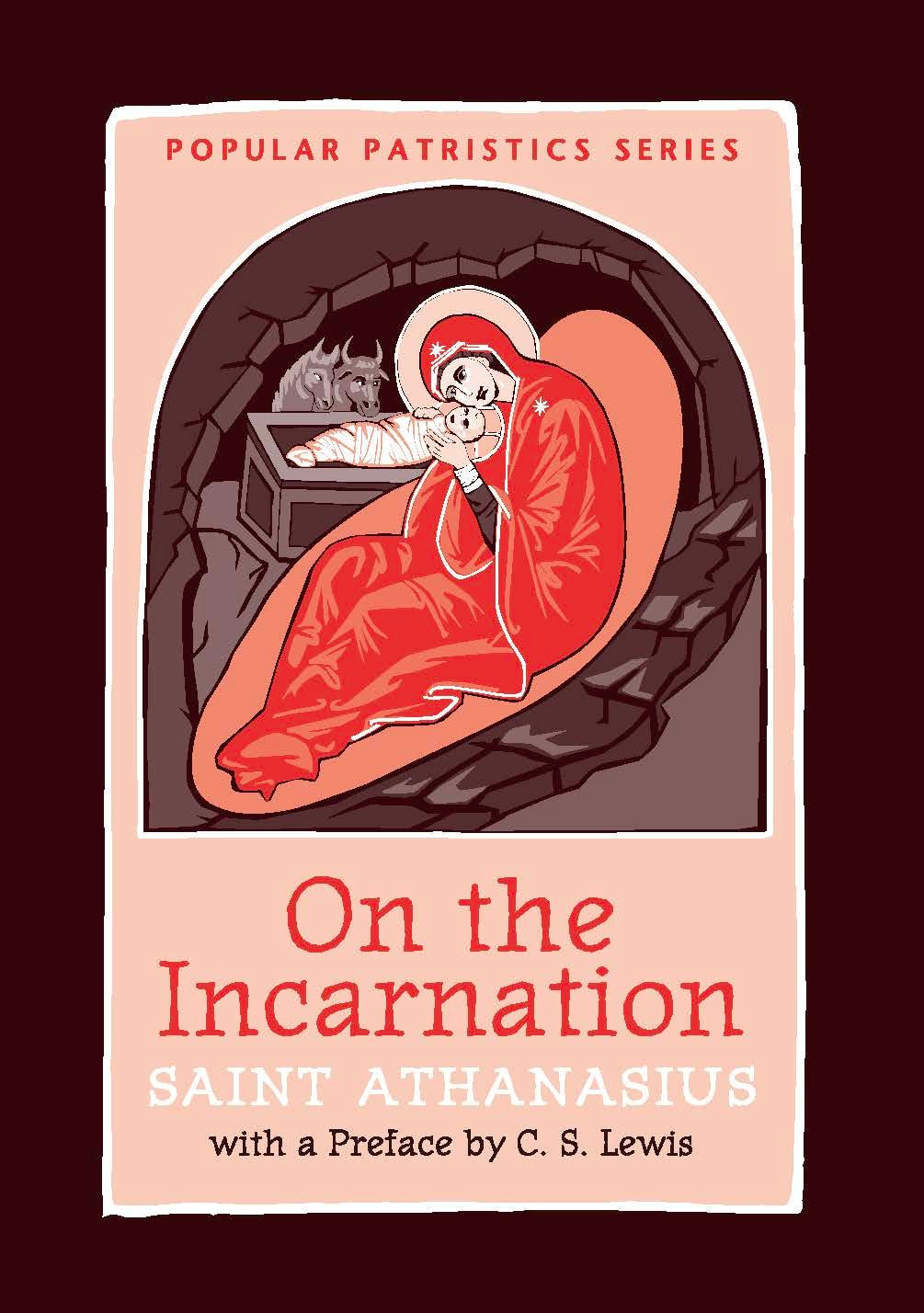
This is why the Incarnation is critical. St. Athanasius argued it 16 centuries ago in On the Incarnation: what was needed was not a message about our condition but someone who would enter it, take our own flesh, and become our actual relative. God became human in order to have the legal standing to redeem us.
He must be able. He needs the resources to cover the debt. The nearer redeemer in Ruth’s story had them and did not use them. Christ had everything and emptied Himself of all of it.
He must be willing. This is where the book breaks my heart, because the man who was closest and richest simply did not want to redeem Ruth. The office cannot be forced on anyone. Which means our redemption was never owed to us and never extracted from Him. He went to the cross the way Boaz went to the gate, with the cost in front of Him, freely.
“Christ redeemed us from the curse of the law by becoming a curse for us... He redeemed us in order that the blessing given to Abraham might come to the Gentiles through Christ Jesus.” (Galatians 3:13-14)
“For your Maker is your husband, the Lord Almighty is his name, the Holy One of Israel is your Redeemer; he is called the God of all the earth.” (Isaiah 54:5)
The Church Father’s wrote, Ruth was both of a strange race and reduced to the utmost poverty, and Boaz when he saw her neither despised her poverty nor abhorred her low birth, just as Christ, having received the Church, an alien and in much poverty, took her to share in great blessings.
This is what the Church has always seen here.
The foreigner brought into the household is us.
Legally Excluded and in the Genealogy Anyway
In part 1, I left this statute standing:
“No Ammonite or Moabite or any of their descendants may enter the assembly of the Lord, not even in the tenth generation.” (Deuteronomy 23:3)
Ruth is a Moabite, by written law she is excluded.
Yet, she is in the genealogy of Jesus Christ.
So is Rahab, the Canaanite from Jericho, who was Boaz’s own mother, which means the man who was so generous to a foreign woman in his field had been raised by one.
Warning! Peoples can be judged corporately. A person will be judged individually. God kept the law He wrote. Yet, He still had the last word on who belonged to Him, and the last word was a woman from the nation He had cursed, standing in the family tree of the Incarnation.
This is the thing the Church means when she uses a word most of us have never been taught. Theosis. Becoming, by grace, what God is by nature. The excluded made kin, the outsider brought inside the household; the stranger becoming family.
An outsider made kin.
This is the entire Bible and the book of Ruth in 4 words. This is us!
What This Asks of You
We might not be Boaz, but we can go stand at the gate. Repeatedly.
Someone is going to need something from you that costs real money, time, reputation, and returns nothing. The aging parent. The brother-in-law who cannot get it together. The nephew no one else is going to pay for. The parish roof. The child who is not going to thank you for twenty years, if ever.
There will be a defensible reason to say no. There always is. The man at the gate had a good one, and everybody there understood.
Here is the thing I would have you think about:
The estate you protect is the thing that disappears. The estate you spend for others is an investment in something that will outlive you.
The sensible man kept his field and is forgotten.
Boaz spent his field and is in the first chapter of Matthew.
Ruth gave up her country, her people, and her prospects for a bitter woman who could not repay her, and 3,000 years later the Church still reads her name out loud before the Nativity.
If you want to move from outside the kingdom to the inside, you will build something that outlives you by giving yourself away.
Build a legacy death cannot take.
Subscribe to Truth & Prosperity. Get the Legacy Audit free and one letter a week, written for men who want their lives to mean something.
Missed part one? Start here. A famine, 3 graves, and a foreign girl who would not go home.